At long last, we’re finally getting a glimpse at what the iWatch may look like. 9to5Mac points us to a new thread on Reddit’s Apple page that purportedly shows us several leaked components from the wearable device that Apple
is set to unveil on Tuesday. The leaked components show that the device
will feature a square face with rounded corners and a round circle in
the center that’s been carved out for the heart rate sensor that will
track users’ fitness activity.
In addition to the watch’s chasis, the leaked pictures also show us
the device’s speaker, mic bracket, speaker mesh, its BCM coil and much
more.
The person who leaked the photos also gives us some key information
about the watch’s specifications: It will purportedly include a
microphone, a speaker, Siri integration, a “flexible multi-touch screen”
that “will add a new dimension to the UI,” and a battery that will
supposedly last all day. What’s more, the device won’t have any
Lightning connector port, which strongly hints it will feature wireless
charging.
More pictures of several iWatch components follow below.
Motorola
announced the successors to the Moto G and Moto X at an event on Friday,
alongside the Moto 360 smartwatch. In an attempt to cash in on the
popularity of both smartphones, has launched them under the same names
as their predecessors, not "Moto G2" and "Moto X+1" as rumoured in
several leaks.
While announcing the handset, the company stressed
that the new Moto X offers "pure style and pure performance", but the
pricing of the Moto X (Gen 2) in India has not been disclosed yet.
Motorola confirmed that the smartphone will be made available by the end
of the month, and so the pricing will be announced at that time.
Interestingly, the previous generation Moto G, Moto X, and Moto E will
remain available on Flipkart, presumably till stocks last.
Compared
to first generation Moto X, the Moto X (Gen 2) looks and feel solid. We
got to spend some time with it at the launch event in New Delhi, and
here are our thoughts.
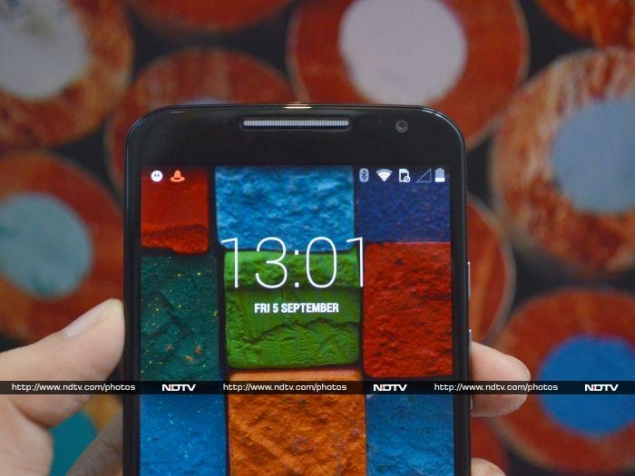
Build, design and display At first
glance, the black Moto X (Gen 2) that we played with looked like an
elongated version of the Moto E with a curved metal
frame. The new dual front speakers reminded us of the budget Moto E time
and again.
The second-generation Moto X measures
140.8x72.4x9.97mm and definitely appears taller and sleeker than the
original Moto X, which measured 129.3x65.3x10.4mm. However, the new
version is a bit heavier at 144 grams compared to 130 grams.
Much
like the old Moto X, the new smartphone's front is completely bereft of
buttons and branding. There are sensors and a visible front camera. The
back has been completely reworked and sports a prominent new Motorola
"M" logo. The physical buttons for power and volume are placed on the
right similar to the Moto X, and were reachable with our thumb. Motorola
wants to stress the Moto X (Gen 2)'s new design elements, including its
curved housing and durable materials.
The second-generation Moto X
features a 5.2-inch (1080x1920 pixels) full-HD OLED screen with a
density of 423 ppi, and also boasts of Corning Gorilla Glass 3 for
protection. The new Moto X's screen is marginally bigger than the 5-inch
one on the Moto G (Gen 2). The screen looked crisp and readable during
our limited time with the device.
Specifications, software and performance One
of the biggest upgrades in the second-generation Moto X lies under the
hood. The smartphone is powered by a Qualcomm Snapdragon 801 (MSM8974AC)
clocked at 2.5GHz. Notably, flagships such as the Sony Xperia Z2,
Samsung Galaxy S5 and HTC One (M8) use the same processor.
The
Moto X (Gen 2) has been launched in two storage variants, 16GB and 32GB,
but there is no microSD card slot for expansion. Motorola has not
revealed whether it will release both variants in India.
Motorola
has also upgraded the Moto X's 10-megapixel camera to a 13-megapixel
unit, which now has an f/2.25 lens and supports 4K video recording.
There is also a dual-LED ring flash around the lens. There is a
2-megapixel front-facing camera capable of full-HD (1080p) video
recording.
The images we managed to take in well-lit conditions
looked brilliant and colours looked vivid. However, camera performance
will have to be tested more thoroughly during our full review. We expect
that 4K video recording will be another big selling point of the
handset, if priced and marketed well in India.
The new Moto X runs
Android 4.4.4 KitKat out of the box, and the company has confirmed it
will roll out an Android L update in due course. Like the previous
generation Moto X, the new device uses a stock build of the OS without
any additional UI skinning.
Notifications on the Moto X (Gen 2)
can be expanded by pulling down with two fingers. The notifications area
also offers quick shortcuts for the brightness, Wi-Fi, airplane mode,
Bluetooth, and location settings. The new Moto X comes preloaded with
multiple Google apps and also includes three of Motorola's own apps -
Motorola Migrate, Motorola Assist, and Motorola Alert.
The new
Moto X also retains one of the highlights of the first-generation
device, the Active Display, which the company has renamed to Moto
Display. There is also a feature that enables users to create their own
prompts for voice commands.
While we didn't get a chance to run
benchmarks on the Moto X (Gen 2) at the event, the Moto X (Gen 2)
handled whatever we threw at it, and the performance seemed good.
Final words The
Moto X (Gen 2) is expected to go on sale by the end of this month. The
company did announce the US pricing of the device which is $499.99
(roughly Rs. 30,200) for an unlocked unit. We will have to wait for the
Indian price to be announced by Motorola before commenting on whether or
not it offers good value for money.
Considering it comes with
upgraded processor, a full-HD screen, better camera and sturdier body,
the Moto X (Gen 2) looks like a huge improvement over its namesake.
Motorola's Moto 360 smartwatch proves that wearables can be as fashionable as Android Wear is
functional, making it the first Google-powered watch worth owning.
Its
circular watch face takes cues from stylish designer wristwatches with
analog tickers, not square-shaped smartwatches. The very
computerized-looking Samsung Gear Live and LG G Watch are no match for what Motorola has up its sleeve.
Moto
360 is appropriately just in time too. While the company originally
scheduled to have it ready for a summer release date, this ambitious
watch is launching a little later than expected: today in the US and
early October in the UK.
Google Now knows someone has been searching the Chicago Cubs' Wrigley Field
That's less than a week before Apple is expected to preview the iWatch along with the iPhone 6, and the same week that LG is expected to put is round LG G Watch R into production.
Wearable
early adopters, however, can hardly say no to the long-awaited Moto
360, especially for the asking price. It's $249 in the US and £199 in
the UK (about AU$267). That's only a little more expensive than Android
Wear's extremely limited smartwatch pickings, all of which can't compare
to Moto 360's stylish design.
One of many custom Moto 360 watch faces
Display
From
day one of Android Wear, Moto 360 has been all about its unique
circular display, an enterprising move by the reborn Motorola. Now we
finally know the official specs that go along with the once-mysterious
round screen.
It clocks in with a 1.56-inch LCD protected
by Gorilla Glass 3. That's not the fancy OLED screen or sapphire glass
that some people were hoping for, but it's a better trade-off given the
on-point price. And the backlit LCD technology looks solid nonetheless.
It works well even in sunlight. Just don't wear sunglasses at the same time
Filling
that circle is 205 pixels per inch with a 320 x 290 resolution. That's
roughly the same resolution as the smaller Gear Live but fewer pixels vs
the Samsung watch's 278ppi. The difference is noticeable in any
side-by-side comparison, but for once it's not about what's inside the
watch face that counts as much as it is about what's gives it its outer
beauty.
Design
The Moto 360 watch frame is
stainless steel, eschewing earlier rumors that is might go the cheaper
route of substituting in plastic to reduce the price. Matching that
quality is genuine leather straps by the Chicago-based tanner Horween,
known for making NFL footballs. It really contrasts with the tacky
plastic housing and rubber straps found on the Gear Live and G Watch.
Which would you rather wear? The battery-sipping Pebble Steel or stylish Moto 360?
Motorola
is making the leather straps available with its smartwatch today in the
US and at launch in the UK. The first colors being introduced are gray
leather and black leather. That doesn't mean you won't be able to
upgrade to the metal bands or different colors when Motorola launches
those, for a slightly higher price and at a later date.
Even
with the premium materials on-board, the Moto 360 weighs 49g (1.7 oz).
That's actually lighter than both the Samsung Gear Live 59g (2.1oz) and
LG G Watch 64g (2.2oz). Motorola still packs in comparable specs on the
inside too.
Specs
There's a Texas Instruments
OMAP 3 processor making this digital smartwatch tick, 512MB of RAM and
4GB of internal storage. It connects to Android smartphones running
Android 4.3, Android 4.4 and the Android L beta through the Android Wear app and Bluetooth 4.0.
A heart-rate monitor joins the wireless Qi charging plate on back
Moto
360 has one physical button unlike the buttonless LG G Watch, and it
turns the display on and off. It's an alternative method of doing the
same by tapping the screen to turn it on and palming the entire display
to quickly turn it off.
It crosses over from smartwatch
to fitness band with health-motivating features like a pedometer inside
and an optical heart-rate monitor on back. It can be worn all day, even
in wet conditions thanks to its IP67 water resistance rating. It's not
completely waterproof, but it can go a depth of 1 meter for about 30
minutes before you run into trouble.
Just say 'Okay Google' to issue commands
Battery life and wireless charger
The
Moto 360 battery life gets about a day per charge thanks to a 320mAh
battery. It's slightly bigger than the Samsung Gear Live battery of
300mAh, but smaller than the LG G Watch 400mAh battery, but it gets the
job done as long as you charge it nightly. Pebble Steel and the original Pebble remain the smartwatch kings of longevity.
Here's the subtle, but effective wireless charging dock. Works great on a nightstand
At
least there's a novel way to recharge the Moto 360. It comes with a Qi
charging dock that is perfect for resting on a nightstand. It dims the
display so that you can get to sleep, but also see the time as you sleep
away into a dream.
It doesn't have the more practical micro USB port that the newly announced Sony Smartwatch 3
is going to have, but the Moto 360 charging method is much more
futuristic and cool. That better fits the stylishing theme that Motorola
is going for with its watch.
Even the box is circular!
Early Verdict
We've
had about 12 hours time with the final Moto 360 smartwatch and haven't
taken it off yet for two reasons. The battery that we wish as longer
hasn't fully depleted after using multiple Android Wear apps on it and,
more importantly, we fancy the circular design.
The
cut-off horizon line at the bottom of the smartwatch, which houses the
screen tech, doesn't bother us either as much as we thought. It actually
pushes the pixels out to the edges of the smartwatch screen with a nice
effect. If you've been holding out on Google new smartwatches, Moto 360
has finally started ticking and the Apple iWatch has some serious competition before its expected unveiling next week.
Sometimes, you can tell that a company went above and beyond in an
effort to add innovative features to a smartphone that aren’t just
different for the sake of being different, they truly add value to the
user experience. You can tell when a company tries to introduce exciting
new features not simply because competing smartphones offer those
features, but because they solve real problems and actually improve the
user experience.
Motorola on Friday finally unveiled its
next-generation flagship smartphone, which had been tossed around the
rumor mill as the “Moto X+1.”
The actual name of the new handset is Moto X, just like its predecessor,
though Motorola will be using “all new Moto X” or “second-generation
Moto X” to distinguish the new version from the old one, which
will still be available for purchase when the new model launches later
this month.
The new Moto X is everything its predecessor was… and then some.
Motorola used a very similar design on the new Moto X model, but the
new model is thinner and far more premium than the original despite the
fact that it will launch at the same $99 on-contract price point. Off
contract, the 16GB version of the phone will cost $499.
The display on the new model is a 5.2-inch full HD 1080p screen, and
there is now a 2.5GHz quad-core Snapdragon 801 processor powering the
Moto X along with 2GB of RAM. The edges are now a single piece of metal
that wraps around the device and services as the antenna, much like the
iPhone 4.
Unlike the iPhone 4, however, Motorola took steps to avoid an
“Antennagate” situation by inventing new technology called dynamic
tuning that senses where the user is holding the phone and increases
signal to other parts of the antenna.
The premium look and feel continues around back, where four wood
options and four leather options can be had for an additional cost when
ordering the device through the Moto Maker, which is Motorola’s website
where users can customize their devices. If plastic is your material of
choice, the new Moto X comes in 16 different colors.
Another big change where hardware is concerned is found on the face
of the phone, where four new sensors help power features like Moto
Assist and Moto Actions.
Here are Motorola’s descriptions of four key services found in the Moto X:
Moto Voice – Do more than ever with just your
voice, without ever touching the phone. Use your voice to interact with
some of your favorite apps like Facebook, YouTube, and Whatsapp. Even
personalize the experience with your very own customized voice prompt
like “You there Moto X?” or “Wake up buddy!”
Moto Assist – Life can be hectic, and Moto X can
adapt its behavior in certain situations so that you can do more or
never be interrupted. It can read aloud new text messages while you’re
driving or at home It can also keep quiet during meetings, or turn off
all sounds when you go to bed – it even knows to turn everything back on
in the morning as you start your day.
Moto Display – You don’t have to wake Moto X up to
look at the time or sneak a peek at your latest messages. When your
display is off, up to three notifications pulse quietly on the screen
without interrupting you. If you want to take a peek, simply touch and
hold one of the notification icons and more details will appear. Slide
left or right to see other messages too – all without ever waking up
your screen or unlocking your device.
Moto Actions – Go beyond just tapping and swiping
your screen. Use simple and reliable gestures to conveniently interact
with your Moto X. It knows when your hand is approaching and activates
Moto Display. Wave your hand to silence incoming calls or snooze alarms.
Use the new Moto X for even a few minutes and you can tell that
Motorola took its time to get things right. It listened to
first-generation Moto X owners and improved the phone in areas that
needed improving, like the camera and display.
Motorola also added fantastic new features that dramatically improve
the user experience on the new Moto X — features that are contextually
aware, constantly adapting based on the user’s location and the time of
day. The new Moto X also ships with a “turbo charger” that adds 8 hours
of battery life to the Moto X after charging the phone for just 15
minutes.
The all new Moto X launches later this month and we’ll have plenty
more to share in our full review, which will run in the coming days.
Motorola has launched the second generation of its popular Moto G and Moto X devices on Friday, calledMoto G (Gen 2) and Moto X (Gen 2). The Moto G (Gen 2) will be available from Friday via Flipkart, priced at Rs. 12,999 for the 16GB version.
Much
to the surprise of fans across the globe, the company has launched the
smartphones first at its event in India, despite confusing reports of a
launch event on Thursday in Chicago. With the popularity of the Moto G and Moto E in India however, the country's importance to Motorola cannot be underestimated.
Both
phones are powered by Android 4.4.4 KitKat, and the company has
confirmed it will roll out an Android L update for the two devices -
however, there was no mention made of such an update for the previous
generation.
Motorola did mention that the previous generation
Moto G, Moto X, and Moto E will remain available on Flipkart, but will
be phased out with time.
The Moto G (Gen 2) will be available in
8GB and 16GB variants. The biggest addition to the smartphone compared
to the first-generation Moto G is the inclusion of a microSD card slot.
The company hasn't yet specified the maximum supported card capacity
however.
The
Moto G (Gen 2) features a 5-inch HD (720x1280 pixel) display, and is
powered by a 1.2GHz quad-core Snapdragon 400 (MSM8226) processor,
coupled with 1GB of RAM and the Adreno 305 GPU.
The
second-generation Moto G features an 8-megapixel autofocus rear camera,
and a 2-megapixel front-facing camera. Notably, the smartphone - like
the Moto E - features dual front speakers, above and below the display,
apart from 2 mics.
Connectivity options on the Moto G (Gen 2)
include 3G, Wi-Fi 80211.ac, Bluetooth 4.0LE, Micro-USB, and 3.5mm audio
jack. It has measures 141.5x70.7x10.99mm, and weighs 149 grams. It is
powered by a 2070mAh battery.
week, and rumors have been wild about the possibility of
Motorola hardware forming the basis for Google’s next Nexus phone, as
well as maybe some of the early Android Silver lineup. While these
devices have captured much of our Motorola attention, we’ve also heard a
little about
What does this spell for us? Like we mentioned, those rumors about
new Droid-series phones on Verizon sound like strong (now even stronger)
possibilities, but even there we find a lot of unknowns; are we looking
at another trio of new devices, or maybe a more reserved offering of
just a couple? Will Verizon keep us guessing for a month like it did
last summer, or could formal announcements be coming this week, as part
of that Motorola event? There are quite a few ways this could go, but
Verizon’s certainly managed to pique our interest, and we’ll be keeping
an eye out for what develops next.
After years of rumors, leaks,
and false starts, it seems the stars will finally swing into alignment
this fall: Apple
is will unveil an iWatch smartwatch alongside
a new large-screen iPhone 6 at an event on September 9, according to the
latest reports. Presumably the iWatch will also be released to the
public alongside the iPhone 6 a week or two later. Previous rumors had
pointed to an October unveil for the iWatch, but it seems Apple has
moved it forward — possibly in response to the Samsung Gear S, LG G
Watch R, and the Moto 360, all of which will be released over the next
month or two. Just as the iPhone and iPad popularized the smartphone and
tablet, will the arrival of the iWatch signal the beginning of the
wearable computing revolution?
Over the last couple of months,
Apple’s (AAPL) stock price has been buoyed by Wall Street’s belief that,
at long last, a new segment-defining device was on its way. Last week
Apple’s stock price finally rose back above its September 2012 peak. It
would seem that, after a couple of years of uncertainty — the echo of Steve Jobs’ death,
essentially — the stock market finally thinks that Apple is ready to do
more than just squeeze its iPhone cash cow for billions of dollars in
profits every quarter.
Apple’s rising stock value, since May [Source: Yahoo]
Enter the iWatch, which has been rumored (or perhaps wishfully speculated is a better term) since 2010. The funny thing is, despite Recode’s confirmation
that the iWatch is coming in September (and Recode is pretty good with
Apple leaks), we know virtually nothing about what Apple’s smartwatch
will actually do or look like. We don’t even know if it’ll be an iWatch —
something akin to an iPod Nano with a wrist strap — or if it’ll be more
of a health-and-fitness iBand. It’s pretty safe to assume that the
iWatch/iBand will tie into iOS 8 features such as Health and HealthKit.
Ultimately,
the big question is whether the iWatch will be a full-fat device that
runs iOS 8 — or a companion device that perhaps runs a cut-down OS for
improved battery life, and requires a nearby iPhone/iPad for
connectivity and other heavy lifting. In either case, even in the wake
of the 3G Samsung Gear S,
I don’t think we’ll see a truly standalone iWatch with 3G/4G
connectivity. If Apple does release an iWatch in September, I’m pretty
certain that extended battery life will be one of the key
differentiators that Apple offers over the Android competition — and it
just isn’t possible to offer 3G/4G and long battery life in a smartwatch
form factor (yet).
Will the iWatch be a smartwatch, or more of an iBand fitness band?
Will
the iWatch kickstart the wearable computing revolution? After Google
Glass and Samsung’s early smartwatches have established a beachhead,
will Apple swoop in and mop up the glory show everyone else
how it’s done? I think it’s unlikely — I just don’t think battery,
processor, and radio technologies are there yet – but I’m happy to be
proved wrong. I think it’s much more likely that Apple is reacting to
the competition, rather than tapping the same well of innovation that
resulted in the iPhone and iPad. (The large-screen iPhones are
reactionary rather than revolutionary, too.)
One of the crazier pieces of fan-made iWatch concept art
In
my eyes, it is surprising that we know so little about the iWatch this
close to its (apparent) release date. Bear in mind that the iWatch will
reportedly appear alongside the iPhone 6 on September 9 — and while we know almost everything about the iPhone 6,
we know nothing about the iWatch. If Apple really is gearing up to
release the iWatch, there will be production lines in China producing
millions of units right now. It’s possible that Apple and its
manufacturing partners have somehow kept the iWatch production line
completely locked down, but it seems unlikely.
In any case, I
guess we’ll find out on September 9. The iWatch is expected to be
unveiled alongside the iPhone 6, which will come in 4.7-inch and 5.5-inch flavors.
Pricing is anybody’s guess right now, depending on whether it’s a
full-fat iWatch or cut-down iBand — but somewhere between $200 and $400
sounds about right. Official invites to Apple’s September 9 event should
be sent out in the next few days.
Motorola's
much-leaked 'Shamu' handset that is rumoured to be Google's Nexus X
(and not Nexus 6
as previously rumoured) was spotted on an Indian import/ export
manifest site. In the meanwhile, the much-anticipated successor the Moto X (Review | Pictures) is also claimed to have leaked in an image.
The Indian import/
export site, Zauba, lists
(via
PhoneArena) two 'Shamu Phones (Prototype)' as shipped on August 20 with
model number Motorola XT1112. The smartphones were shipped from the
United States, and had a declared value of Rs. 34,982 each.
To be
noted is that import/ export website price listings are only declared
values, and usually are not accurate reflections of actual market price.
The
much-leaked Motorola 'Shamu' handset, expected to hit the market as the
Nexus X, is
rumoured
to launch on October 31. Notably, recent reports have indicated Google
might
launch
two Nexus smartphones instead of one 5.9-inch Nexus X only. Meanwhile,
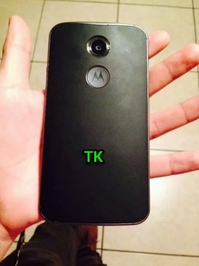
the much-awaited successor to the Moto X, thought to be called the Moto
X+1, has also been
leaked
in a live image flaunting a leather back in black colour and a grey
Motorola logo, ahead of the expected official
launch
on September 4. Last week, the device had reportedly
passed
US FCC certification for AT&T and T-Mobile wireless carriers.
On Monday, TK Tech News posted new purported images of the Moto X+1,
this time with a wooden back panel and the display turned on, revealing
the icon for the Moto app. The website reported
that the smartphone will feature an aluminium frame, and four sensors
on the front panel that could either tie-in with the Moto and Moto Aware
apps, or deliver a 3D interface.
Notably, the website also
notes that the previously leaked Moto logo on the back panel of the
smartphone is actually the power button, and also offers some
gesture-based shortcuts. Finally, apart from wood, plastic, and leather,
the website claims the Moto X+1 will ship with choice of denim as well
as carbon fibre pack panels.In
April, @evleaks had
tipped
the Moto X+1 smartphone to come in 25 colour options in five categories
- Cool, Neutral, Warm, Wood and Leather. The added leather finish back
option (not available for original Moto X), was
tipped to also include Red, Blue, and Grey colours.So far, the
rumoured
specifications of the Moto X+1 include Android 4.4.4 KitKat; a 5.2-inch
full-HD (1080x1920 pixels) display, a 2.4GHz quad-core Qualcomm
Snapdragon 800 processor; an Adreno 330 GPU; 2GB of RAM; 16GB of
built-in storage; a 12-megapixel rear camera, and a 2-megapixel front
facing camera.
Ahead of Motorola's September 4 launch event, some leaked images purportedly showing the Moto G2 handset have surfaced online,
along with a comparison with the Moto G.
HellomotoHK, the tipster who
has been posting images
of claimed to be of Motorola's upcoming smartphones in recent few
weeks, has again obtained images of the yet-to-be-announced Moto G
successor, believed to
be dubbed Moto G2.
The tipster posted images on Facebook that are claimed to show
the front and rear, as well as the changeable shells of the unannounced
Moto G2. The leaked front panel image shows the handset sporting dual
speaker grills both on the top and bottom of the display, like the Moto E. The rear panel leaked image shows the primary
camera accompanied by an LED flash, and also shows the non-removable
battery on the Moto G2. Another posted image by HellomotoHK shows the
changeable shells of Moto G.
The Facebook post
said, "You
can fully preview the next generation Moto G here! Same Dual-SIM design
plus microSD memory card support. The back cover is removable, so you
can also customize the phone with the Motorola Shells."
In another
Facebook post, HellomotoHK has highlighted some of the major upgrades expected in
the Moto G2 such as a 5-inch display when compared to 4.5-inch on the
Moto G; thinner bezels than its predecessor; 8-megapixel camera instead
of the 5-megapixel found on the Moto G, and in addition, front stereo
speakers apart from support for microSD card.
It seems Motorola is
taking note of shortcomings of the Moto G and acknowledged one of its
biggest issues - limited inbuilt storage. If HellomotoHK is to be
believed, the Moto G2 will come with expandable storage support. Notably, Motorola has definitely
acknowledged this shortcoming in the past, and the release of the Moto G
4G with microSD card
support in May for select markets is evidence of the cognisance.
Other
rumoured specifications of the Moto G2 include a Snapdragon 400 chipset with a
quad-core 1.2GHz Cortex-A7 CPU; an Adreno 305 GPU; 1GB of RAM;
2-megapixel front camera; 8GB of internal storage, and Android 4.4.4
KitKat.
Notably, out of the rumoured eight devices said to debut
before Christmas, the successors to the popular Moto X and Moto G -
rumoured to be called the Moto X+1 and Moto G2 respectively - alongside
the much-awaited Moto 360 smartwatch, are likely to launch at a pre-IFA
event on
September 4.
Motorola India has also confirmed an event on September 5 in the country, where the company is expected
to launch the successors of the Moto X and Moto G.
Motorola's
much-leaked Shamu handset, rumoured to be the next Nexus smartphone,
will now reportedly be called the Nexus X (and not Nexus 6 as previously
rumoured), if a leaked screenshot of a listing at US retailer Best Buy
is to be believed. In another report, the smartphone's secret launch is
already being planned around Halloween, October 31.
The alleged
Motorola Nexus X XT1100 Best Buy listing was spotted
by Tktechnewsblog. The listing notes the smartphone's two-year
contracted price will be $499.99 (approximately Rs. 30,000) on Sprint
wireless carrier. According to the listing, the smartphone will feature a
5.9-inch Quad-HD (1440x2560 pixels) display, and a 2.7GHz quad-core
processor, along with Android LMP operating system.
As we
mentioned earlier, the next Nexus smartphone, the anticipated Motorola
Shamu, was expected to be called the Nexus 6. However, referring to an
earlier dispute with the family of author Philip K Dick, the Nexus 6 is a
name Google may not be able to use. The WSJ had reported in 2010 ahead
of the Nexus One's launch that Dick's family
had claimed the use of the word Nexus was a clear infringement of the
novel 'Do Androids dream of Electric Sheep?', where the Androids were
called Nexus-6.
For the release date, a PhoneArena claims that it
has been told that Google is planning a secret launch around Halloween,
just like the launch of the Nexus 5. The
report
also says that Google might launch the alleged Nexus X without an
announcement.
Earlier the anticipated smartphone was allegedly
listed
in benchmarks specifications as 'Google Shamu', with a 5.2-inch Quad-HD
(1440x2560 pixels) display, a quad-core 2.7GHz (precisely 2649MHz)
Snapdragon 805 processor (APQ8084), Adreno 420 GPU, and 3GB of RAM. The
primary rear camera was suggested to be a 13-megapixel camera, while
there will be a 2.1-megapixel front camera also onboard. The device was
also listed to run Android L.
After reporting that the Motorola Shamu – also known as the Nexus 6 in most rumors – might actually be called the Moto S a few days ago, TKTechNews is back
with a different Motorola leak and this one says that the Lenovo-owned
company is preparing an arsenal of new Android devices, including the
Motorola Shamu Nexus 6.
According to its sources, Motorola
will launch up to eight devices by Christmas, including a Droid, Droid
Maxx, Droid Turbo, Moto S, new Moto G, Moto X+1 and Moto X Play.
Interestingly, one of the Droids is apparently tied to a Star Wars
promotion.
The Moto S, which was previously said to be the Shamu, appears to be
an independent version of the Nexus 6, and will reportedly pack a
5.9-inch display. A smaller version of it may ship with a 5.2-inch – the
Moto X Play.
Verizon might be getting the “lion share” of these devices, although
there’s also a possibility the Droids will hit other carriers, such as
AT&T, under a different brand.
Motorola has yet to confirm any of these handsets, although the
company may unveil some of them at its upcoming media event – likely the
carrier-branded models, as a Nexus 6 is unlikely to arrive before
Android L is ready for mass consumption.
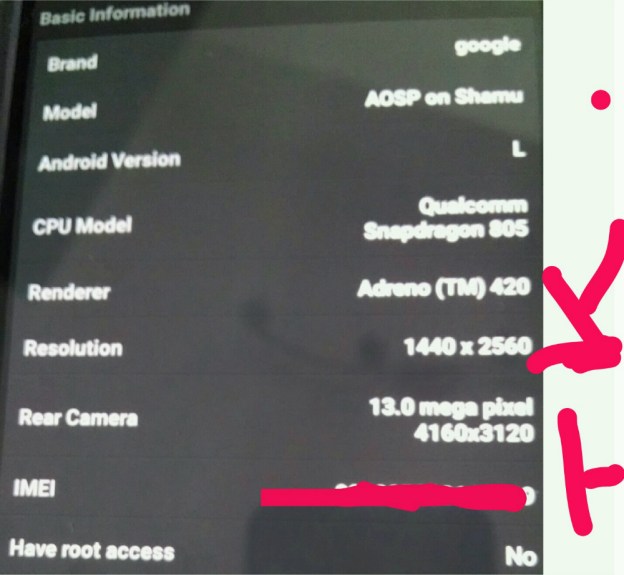
TKTechNews has also provided a picture of a purported Nexus 6
handset, which displays specs for the handset, including a 2K display
of unknown size, Qualcomm Snapdragon 805 CPU, 13-megapixel camera and
AOSP version of Android L. The device is clearly branded as a Google handset, assuming the image (available below) is accurate.
Motorola hasn’t given up on tablets totally, in spite of the fact I
can’t even remember the last time they launched one. If Samsung was able
to get back in the Super AMOLED game 3 years after launching its first
Super AMOLED tablet, why can’t Moto be back after a break?
The latest such rumor says that the company is testing multiple
tablets that could see release in the summer of 2015. Sources close to
the matter are saying that Moto is testing tablets in the 7 inch and 11
inch area, as well as 12.5 inch. The 7 inch models are in full
development, but it’s unclear if the bigger ones will make the cut. The 7
inch tablets being tested right now run on the Snapdragon 801 SoC, but
the Tegra K1 is actually the CPU that may arrive on the final version.
No idea if there will be any sort of Moto Maker customization, but
one thing’s for sure. Ex CEO Dennis Woodside claimed that there will be a
day when a Moto Maker customized slate will come. Many things have
changed since then, including Moto’s owner, that’s now Lenovo instead of
Google.
.png "English")