Translate

Showing posts with label Google. Show all posts

Monday, September 8, 2014


Google's Chromecast promised to be an extremely low-cost way to turn any TV with an HDMI port into aover an year ago in the US it has yet to hit the Indian shores officially.
smart TV, letting you stream content to the dongle from your smartphone, tablet or any other device running Chrome. While the device launched
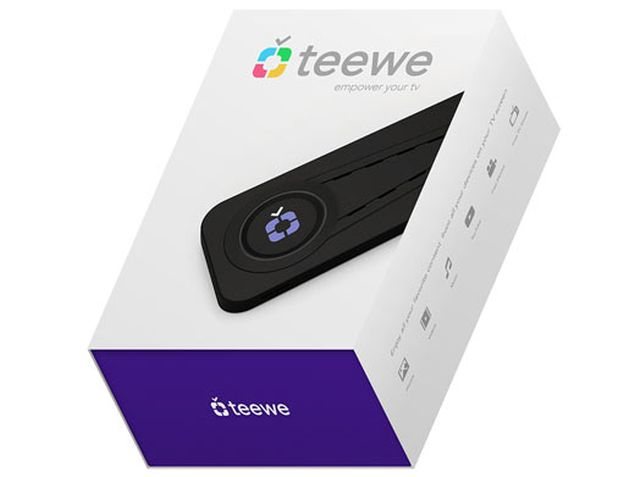
Yes, Chromecast is available through importers at Rs.3,500 or more online, but that's a lot more than the $35 (approximately Rs.2,100) that it costs in the US, which makes the main USP of the product - it's low price - redundant. A new product called the TeeWe, made by hardware startup Mango Man Consumer Electronics, aims to fill that gap, and the company's HDMI dongle is priced well at Rs.2,399, with a pre-order price of Rs.1,999.
You can stream content to the TeeWe from Android and iOS devices, with desktop clients for Mac and PC becoming available by the time the units reach customers.
We used the Teewe for over a week to see how well it works and how it measures up to Google's Chromecast.
Design
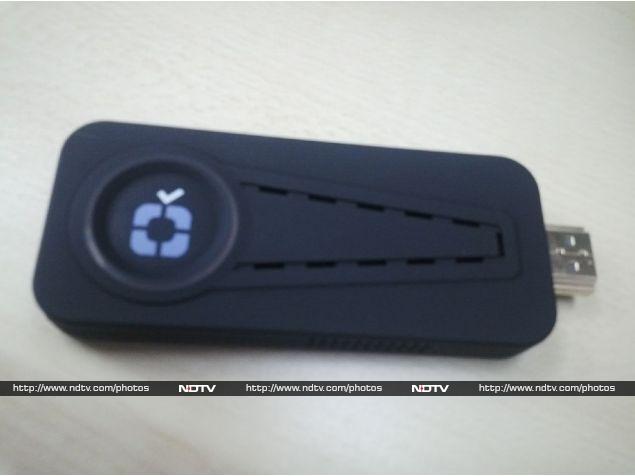
Given how many Indian products often struggle with design, we were certainly pleased with the look and finish of the TeeWe. It is very similar to the Chromecast in size, though a little bulkier. Instead of the key-like shape of the Chromecast, the TeeWe is a smooth rectangle - it's perfectly flat but the plastic body doesn't have sharp edges either. The HDMI jack sticks out along one of the smaller sides, and there's a Micro-USB port along the long side at the other end of the stick. This is used to connect the dongle to a power supply - the included wall adapter (Chromecast doesn't come with one) has a long cable so it wasn't very inconvenient to use.
The all plastic body doesn't really feel like a premium product, but it doesn't look cheap or tacky either. When you consider the price of the product, we think that Mango Man's design work is up to the mark.
teewe_detail_085214_105234_6456.jpg
Setup
Setting up the TeeWe is pretty straightforward. Connect the dongle to your TV's HDMI port, and connect the power. After that, follow on-screen instructions to set up the TeeWe's Wi-Fi.
To do this, you first connect your mobile device to the TeeWe-generated WiFi network, and use the connection to set up the TeeWe with your home Wi-Fi. Once this is done, you just select the content you want on the mobile device, and you can start streaming it to the TeeWe.
Features
The TeeWe is designed for entertainment - you can use it to stream local media (photos, music and movies) from your mobile or tablet to a TeeWe plugged into a big screen television without any trouble. You can also use it to stream video from the Web, controlled through the app on your phone or tablet.
The app is straightforward, with the different sections laid out in scrollable rows. You have YouTube videos, and a curated list of free content on the Internet to make it easy for people to find free Indian TV shows and movies. There are also rows for locally stored content, so you can push your songs and videos directly from your phone without needing Internet access, as long as the two devices are on the same Wi-Fi network.
What's missing right now is a screen-mirroring option. According to the TeeWe team, this wasn't something in the initial roadmap at all, but the feedback they've received so far means that it's something they want to add in the near future via over-the-air software updates.
Performance
The TeeWe was able to stream plenty of videos from YouTube smoothly, changing streams as soon as we tapped the icons on our mobile's screen. Playing local content was similarly easy and the playback was completely without any stuttering or lag.
To test the local playback, we tried a number of video samples - this included 720p and full-HD content, in popular formats like AVI, MP4 and MKV. Full-HD playback stuttered at times, but 720p worked flawlessly throught.
The TeeWe app is the only way to send media to the dongle and using the app itself is straightforward. On our Android device, the app found all the movies on the tablet but on the iPad, it was a little less useful because like most people, we store our local media in different apps. TeeWe can find locally saved videos only if they're saved in your device's Videos or copied directly to the TeeWee app, but that's an OS limitation every app must live with.
teewe_box.jpg
Verdict
If you're looking for a low-cost way to stream videos from the Internet or your smartphone/ table to the big screen, the TeeWe looks like a pretty good choice. The companion app is easy to use, and the actual streaming worked without any difficulties.
The catch is that there are a number of ways to bring this kind of functionality to your television without having to use a TeeWe. If you have a laptop, you can probably connect it directly to the television with a simple HDMI cable. If you have a game console like the Xbox 360 or PlayStation 3, then too you can share your videos over Wi-Fi quite easily. Not to mention other alternatives like HTPCs, Chromecast and indeed Apple TV.
However, all those options are either too expensive, inconvenient or suffer from a lack of portability. If you want something that can slip easily into your pocket and carried to a friend's house, the TeeWe is perhaps the best option officially available in India right now that doesn't cost a bomb.
So does that make the TeeWe better than the Chromeast? Not without the third-party support. As Google's official HDMI dongle, support for Chromecast has been integrated into a lot of apps on Android, and indeed iOS. If you have the Popcorn Time app on your Android device, for example, you can use it to download and stream movies directly to your TV using a Chromecast.
It is hard to imagine Popcorn Time adding support for Teewe unless Mango Man can somehow convince the developers to come on board. But the company doesn't seem too keen to do that, saying it wants to add Chromecast support to its own app instead, a move that indicates it's more keen to push its software instead of hardware.
While the Teewe may never get as popular as the Chromecast, it's still a solid choice for anyone looking to get started with streaming videos to the big screen.

Source>>>

Saturday, September 6, 2014

Google stepped up its attack on the smartphone market on Tuesday, introducing a new touch-screen handset that is widely seen as a rival to Apple’s iPhone.
called Nexus One

Google also said that it would sell the Nexus One, which it called a superphone, exclusively through a new online store. Google, which earns the vast majority of its revenue from advertising, said it was dipping its toes in the direct retailing business not to reap profits from the sale of phones but to broaden the availability of handsets running its Android software.
“There is an opportunity to make some margin on the unit sales, but that’s not the objective here,” Andy Rubin, a vice president of engineering in charge of the Android technology, said during a press conference at Google’s headquarters here. “Our primary business is advertising.”
Consumers will be able to buy the Nexus One for $529 unlocked or for $179 with a two-year calling plan from T-Mobile. Google said that the Nexus One would be available on Verizon Wireless in the United States and on Vodafone in Europe later this year. It said it hoped to add other devices and carriers to the direct-to-consumer program in the future.
Some analysts said they were impressed by the speed of the Nexus One and by some of its capabilities. Google has voice-enabled all text boxes in the device, so a user can, for example, compose an e-mail message by speaking into the phone rather than typing. But they expressed disappointment that Google had not done more to shake up the industry by, for example, subsidizing the phone through profits from advertising.
“It would have been nice to see them roll out something really unique,” said Danny Sullivan, the editor of SearchEngineLand and a longtime Google analyst. “It is more evolutionary than revolutionary.”
The Nexus One, which was built by HTC, a Taiwanese electronics manufacturer, has a 3.7-inch screen and runs the latest version of Google’s Android operating system. At less than a half-inch thick and 4.6 ounces, it is slightly thinner and a tad lighter than the iPhone. It has a removable battery, a 5-megapixel camera with an LED flash and can shoot both still images and video.
Google executives called the Nexus One “exemplar” of what is possible with Android today. They said Google was pleased with the success of Android, which in little more than a year has grown from one device on one carrier to 20 devices with 59 carriers around the world. But they decided to work closely with HTC to design the best possible device based on its software.
The only person in the room who did not appear ready to concede that the Nexus One was the best Android device in the market was Sanjay Jha, the co-chief executive of Motorola, which recently introduced the Android-based Droid.
“I think the Nexus One is a good phone; I think the Droid is a good phone,” Mr. Jha said. But Mr. Jha appeared to embrace Google’s plan to market phones directly to consumers. “I see this potentially as an expansion of the marketplace,” he said.
Similarly, cellphone carriers appeared unperturbed by Google’s plan to sell unlocked phones directly to consumers. “We certainly welcome bringing more choices to the marketplace,” said John Taylor, a spokesman for Sprint. Jeffrey Nelson, a spokesman for Verizon Wireless, said his company was aware of Google’s plans for a store when it signed a broad cooperation agreement with Google.
For now, the Nexus One phone works only on cellular networks using the G.S.M. standard, which in the United States is used by AT&T and T-Mobile. It can run on AT&T’s network if the unlocked-phone owner has an AT&T SIM card, but it will work only on the older and slower EDGE network, not the faster 3G network, Google said.
The Nexus One has a high-speed 1-gigahertz Snapdragon chip from Qualcomm, which keeps multiple applications running quickly. It has some 3-D display capabilities, and Google collaborated with Cooliris, a Silicon Valley start-up, to incorporate that company’s technology, which showcases photos along a scrolling wall of images. Google also introduced a version of Google Earth that runs on the Nexus One.
“It looks like a really cool phone,” said Charles Golvin, an analyst with Forrester Research. “But it is not a game changer.”
Peter Chou, the chief executive of HTC, refused to disclose sales forecasts for the Nexus One, but he said that the device “pushes the limits of what’s possible on a mobile phone today.”
While the Nexus One may be a rival to the iPhone, Google and Apple are approaching the cellphone market with very different strategies: Apple makes money by selling phones and Google makes money by selling ads. But there is little doubt that the two companies are on a collision course.
If the Nexus One or other devices sold through Google’s store succeed, they could eat into the appeal of the iPhone. Meanwhile Apple said Tuesday that it had acquired Quattro Wireless, a mobile advertising start-up, indicating that it has plans to attack Google’s core advertising business. 


Wednesday, September 3, 2014

Google Logo

Google is working on an extremely fast quantum computer processor that could make computers millions of times faster than they are now.
The Quantum Artificial Intelligence team at Google will be teaming up with University of California Santa Barbara physicist John Martinis and his researchers to "design and build new quantum information processors."
"With an integrated hardware group the Quantum AI team will now be able to implement and test new designs for quantum optimization and inference processors based on recent theoretical insights as well as our learnings from the D-Wave quantum annealing architecture," said Hartmut Neven, Director of Engineering at Google.
John Martinis is one of the leading scientists in the field of quantum artificial intelligence. In fact, he recently won the London Prize for his advances in the field. He will now be an employee of both Google as well as UCSB, along with a few members of his team who will also be employed by Google.
This is not the first time Google has partnered with others in the field of quantum computing. Last year the search giant's artificial intelligence lab partnered with NASA to further research into the technology.
Google will continue its partnership with both NASA and D-Wave, a quantum computing company based in Canada. Google's and D-Wave together are experimenting on NASA's "Vesuvius" machine.
"We will continue to collaborate with D-Wave scientists and to experiment with the 'Vesuvius' machine at NASA Ames which will be upgraded to a 1000 qubit 'Washington' processor," continued Neven.
Computers today use binary data, which is expressed in one's and zero's. Quantum computing explores the use of subatomic particles. A number of theorists think that qubits, which is a unit of quantum computing, could express all combinations of bits at the same time, meaning the speed and power of computers would be vastly increased.
Google hopes to one day build "fully reasoning artificial intelligence," however this is still a number of years away. Scientists have been developing the technology for decades.
Despite the incredible advancements that could come with artificial intelligence, some are worried about robots eventually becoming aware enough to want to take over. In fact, DeepMind Technologies co-founder Shane Leg even warned of the technology's role in human extinction.
"Eventually, I think human extinction will probably occur, and technology will likely play a part in this," Leg said in an interview.
Google continues to create futuristic technology, with the company also building self-driving cars, weather balloons with WiFi connectivity and robots.

 
htc_one_m8_generic_twitterofficial.jpg
HTC, teaming up with Google to woo new smartphone consumers, has announced that it will be offering up to 25GB additional, or up to 100GB additional free Google Drive space for select HTC smartphones.
The Taiwanese giant on Tuesday announced the news on Twitter and also revealed names of some HTC models included in the offer. The HTC smartphones will be offered the additional cloud storage space for a limited period, which is two years.

Google's support page for 'Google Drive offer for HTC Android devices' lists the new HTC One (M8), HTC Desire 816, HTC Desire 610, and HTC One Max smartphones, which will be receiving up to 100GB additional free Drive storage. In addition to the recently launched high-end smartphones, the page details that up to 25GB additional free Drive storage will be available for select 2013 HTC handsets including HTC One, HTC Butterfly S, HTC One Mini, and HTC Desire 601.
The page further mentions, "When upgrade to HTC Sense 5+ and Sense 6 becomes available on certain 2013 HTC models, +25GB for two years. [..] The offer must be redeemed before January 1, 2016. For most devices, you'll have your storage for 2 years, starting on the date you redeem the offer."
Google notes that consumers will be able to redeem one offer one time per device. However, the post notes, "You may redeem one +100GB offer and one +25GB offer on two eligible devices using the same Google account. You may not redeem the offer of the same type on more than one account within a 12 month period."
The support page clearly notes that at the end of the two year period, "All of your files will remain in Drive and you can access, download, or share them whenever you want. You won't be able to add additional files if over quota unless you buy more storage."
Last year, the Taiwanese giant in a similar manner announced free Google Drive storage offering up to 25GB to 50GB free space for select HTC smartphones.
HTC recently launched its most affordable smartphone, the Desire 510 in HTC's Desire line-up to support 4G LTE.

Tuesday, September 2, 2014

GearLive

Google is casually tipping its hand and revealing a bit of what's in the cards for smart watches running on its Android Wear platform, detailing updates that will enhance support for voice control and navigation in the short term with the promise of a steady streams of patches for the long run.
Early entries into the smart watch sector from LG and Samsung have helped forward thte development of Android Wear and several other hardware manufactures are expected details plans for devices that will operate on the platform. On the other side of the fence and on the same field, Apple's iWatch is projected to make an appearance alongside the upcoming iPhone 6.
With smart watches continuing to gather steam and competition from a rival arriving soon, Google is pushing the evolution of Android Wear with a series of regular, yet significant, stream of updates. In a conversation with CNET, Director of Engineering for Android Wear David Singleton and Vice President of Engineering for Android Hiroshi Lockheimer detailed some of the changes inbound for Android Wear and shared their vision for devices running the operating system (OS).
In an update to Android Wear, said to be days away, Google will rol lout enhancements that enable the the OS to leverage the native GPS tech inside of smart watches and the software upgrade will enhance the performance of voice control. The company would like to improve interaction between smart watches and devices beyond smartphones.
While Singleton says official support for custom watch faces hasn't been forgotten, he spent more time looking up at the big picture. The ability to roam the yard without a tether to a smartphone will enable smart watch wearers to go for a run with strapping a phone to an armband or weighing down a pocket with a handset, according to one scenario presented by Singleton.
"One of the things we're going to be able to do is add the ability for these devices to start working with some of the other devices you might wear on your body," says Singleton. "So we'll have an update coming that allows you to pair a Bluetooth headset with your watch. And that means you can play music stored on your watch directly on your Bluetooth headset."
smart watches are guided by the same principles as other wearable tech Google is prototyping or pushing, according to Lockheimer. It all about improving lives, he says.
"Our approach to wearables is the same as our approach to any of our products: We want to build technology that delights people by improving their lives," says Lockheimer. "So our approach to wearables -- watches, Glass, even our smart contact lens project which is designed to help people with diabetes measure their glucose -- is to build things that you use when you need and forget about when you don't."

Google Chrome OS reviewStop us if you've heard this one before: ultra-cheap, ultra-portable laptops running Linux instead of Windows and using flash storage instead of hard disks. The similarities between Google's Chromebooks and the first wave of netbooks are obvious, but there are important differences too.
Processors and batteries are better, delivering decent performance and all-day battery life. We're now more connected, with ubiquitous Wi-Fi and good mobile broadband available in most urban and suburban areas. Also, cloud computing apps can be as good or even better than traditional desktop software. Can Chrome deliver what netbooks promised, and should you consider going Chrome OS in your business?
Chrome Settings
You can adjust basic options from the Settings screen


What is Chrome OS?

Imagine an operating system that only ran the Chrome web browser (which you can download here). That's Chrome OS.
There's a desktop that you can look at but you can't stick files on, a status bar where you can pin your favourite apps, see the clock and check the strength of your Wi-Fi connection, and there's a browser. And that's it.
The selling point here is simplicity. By focusing on one thing – web apps – and doing it to the exclusion of all else, Chrome OS can avoid the complexity and bloat of traditional operating systems. It should run well on inexpensive hardware, it should be easy to deploy and to manage, and it should be free from the malware and exploits that plague more complex systems. And in most cases it delivers on those promises – provided, that is, that the software you need works as a web app and that you have reliable internet access.
Chrome was originally intended as an online-only operating system, but it soon became clear that this was a problem – especially in places such as rural Britain, where mobile broadband isn't always available and Wi-Fi hotspots are few and far between. Recent versions of the OS have embraced offline access to an extent – for example, Google Docs enables you to work on documents offline and sync once you get back to broadband, Gmail provides most of its features offline and Google Sheets, Slides and Drawings can work offline too. However, third-party apps generally expect a network connection.
Chrome app launcher
Chrome keeps things simple... this is the app launcher
Another issue you might encounter is that Chrome assumes any connection is a good one – so it'll cheerfully download OS updates in the background even if you're on a very patchy mobile broadband connection, which can slow things down considerably. For example, we're typing this on a poor quality Wi-Fi connection as updates download, and there's noticeable lag between our key presses and the letters appearing on the screen.

Google today announced the launch of the first beta build of 64-bit Chrome for Mac, following the public

Earlier this month, Google added 64-bit support to Chrome Canary for OS X, the experimental build of its Chrome web browser, but with this new beta version, testers on the Beta channel will have access to 64-bit Chrome support.

According to Google, 64-bit support for Chrome will bring several speed and security improvements to the browser, in addition to decreasing the amount of memory it uses.
release of 64-bit Chrome for Windows.
64-bit Chrome has become faster as a result of having access to a superior instruction set, more registers, and a more efficient function calling convention. Improved opportunities for ASLR enhance this version's security. Another major benefit of this change comes from the fact that most programs on a modern Mac are already 64-bit apps. In cases where Chrome was the last remaining 32-bit app, there were launch-time and memory-footprint penalties as 32-bit copies of all of the system libraries needed to be loaded to support Chrome. Now that Chrome's a 64-bit app too, we expect you'll find that it launches more quickly and that overall system memory use decreases.
64-bit support for the Windows Chrome beta was implemented in July with a stable release coming a a month afterwards, so a stable Mac release could possibly follow a similar timeline, coming in September. 
 

Sunday, August 31, 2014

The Samsung Galaxy Nexus was the world's first phone to run Android 4.0: Ice Cream Sandwich andAndroid 4.1: Jelly Bean. It's an upgrade that keeps it as relevant as ever and we've updated our review to reflect the changes.
now just under a year later it's the first phone to run
There are some gadgets in geek-world that are announced and we just could not wait to touch. The Nokia N95, the original iPhone, the T-Mobile G1 and Palm's first Pre.
The Galaxy Nexus fitted firmly in that category back when we first reviewed it and in many ways, coming back to it now, it still does.


The big selling point here is not so much the handset – it's what powers the Galaxy Nexus. With Android 4.0 Google redrew its Android OS in probably the biggest overhaul since it launched and the Galaxy Nexus was the flagship device for that OS.
Despite the fact that many handsets are still stuck with Android 2.3: Gingerbread, Google hasn't stood still and the result of their hard work is Android 4.1.
Samsung Galaxy Nexus review
It's an evolution rather than a revolution, an attempt to refine what the company did with Android 4.0. But it's no less exciting for it and once again the Galaxy Nexus is Google's standard bearer, bringing smartphone users their first taste of the new OS.
On top of that, the specs include a fantastic Super AMOLED HD screen, dual-core 1.2GHz processor, 1GB of RAM, 5MP camera and NFC support, to name a few.
Samsung Galaxy Nexus review
The Nexus itself is fairly big, with dimensions of 135.5 x 67.9 x 8.9mm, though it's actually slightly smaller than Samsung's flagship handset, the Samsung Galaxy S3.
Although it's slightly smaller it's also a little bit heavier at 135g compared to the latter's 133g. It doesn't feel enormous, really it's at the upper end of what we'd consider to be an ideal size for most users, but you can tell you are not using an iPhone 4S.
The front is probably as minimalist as you can get. It's all black and being built from the ground up as an Android 4.0 handset there are no buttons in sight.
Samsung Galaxy Nexus review
In fact, all you have on the front is the screen, front facing camera and the brightness sensor, plus a cheeky little light beneath the screen that you don't even know exists until you get an email and it begins to pulsate.
The sides are fairly unremarkable with power/standby on the right along with three charging pins (for a dock accessory), volume on the left, nothing up top and the bottom housing the charge/sync socket and headphone jack.
Samsung Galaxy Nexus review
The whole handset has a curved shape much like that on the Samsung Galaxy S3 but it's not too severe.
The rear takes its design cues from the Samsung Galaxy S2 with a snap on cover that feels slightly coarse to give a good grip. It has both Google and Samsung branding on it.
Samsung Galaxy Nexus review
You won't find an SD slot on the outside, or indeed, the inside. Ridiculously, this – the flagship Google handset which is so set up as a media device – has been crippled by having NO expandable memory. Words fail us. And they may fail you when you realise that 16GB internal storage is your lot.
But the screen, when lit up, looks fantastic. It's 4.65-inches with a resolution of 720 x 1280, giving it a pixel density of 316ppi. It really is super sharp. We would have expected nothing less with Samsung's mobile displays among the best out there, but it's cracking for internet and video.
Samsung Galaxy Nexus review
There is no doubt about it – this is a premium handset and is up there with the iPhone 4S and Samsung Galaxy S3 in terms of marketing position.
If you want one, there's good news: the price has dropped to just £21.50 per month on contract and £295 SIM free.

Saturday, August 30, 2014

The Samsung Galaxy S4 is now over a year old and if you haven't heard it's been replaced in 2014 byGalaxy S5.
the Korean firm's latest flagship offering, the
Its replacement hasn't spelt the end for the Galaxy S4 however - it's still on sale, at a lower price point, and Samsung is continuing to churn out software updates for it.
The latest software upgrade arrived in the form of Android 4.4 KitKat and we're currently putting the Galaxy S4 back through its paces with the new software onboard. We'll be updating this review shortly with the latest findings.
One of the most impressive things about the phone was the fact the size hadn't changed from the Galaxy S3 - the Galaxy S4 comes in at 136.6 x 69.8 x 7.9mm (5.38 x 2.75 x 0.31 inches), meaning there's no extra heft to try to work with in your palm.
  • Here are some top tips and tricks to get you started on your Samsung Galaxy S4:

However, despite this fact, the screen on the S4 has been increased once more, to a 5-inch display with Full HD resolution. OK, so it's no longer a big deal when compared to the 5.5-inch QHD offering on the LG G3, but that doesn't mean it's not a greatly impressive screen.
Samsung Galaxy S4 review
The Galaxy S4 borrowed a lot from the other top smartphones. Both the Sony Xperia Z1 and the HTC One have screens that rock the same resolution, but neither of them have the jaw-dropping clout of the Super AMOLED HD screen on offer here.
On top of that, there's a much faster processor packed under the hood, ample storage space for media thanks to an expandable memory card slot, and the likes of 4G, Bluetooth 4.0, NFC and pretty much any other connection you care to mention on board.
Samsung Galaxy S4 review
Samsung has tried to supplement this with a tranche of software upgrades too, meaning a more powerful camera, a better way to communicate with your friends and consume media, and interestingly a big push into health through dedicated apps too.
The Samsung Galaxy S4 has unsurprisingly dropped in price on contract and it can be had around £23 per month, which isn't too bad for a handset which is still pretty well specced.
It can also be had for just £380 SIM-free at Carphone Warehouse, while if you fancy a PAYG deal EE is offering the Galaxy S4 for £339.99, which makes it a decent proposition... and it's much cheaper than the equivalent 16GB iPhone 5C too.
Galaxy S4 review
But before we dissect all the possibilities the phone has to offer, let's look at the design. As we mentioned, it's impressive in its form factor, thanks to the sub-8mm thickness, and at 130g it manages to still be light without shaving off so much heft that you feel like you've got a flimsy piece of plastic.
Samsung Galaxy S4 review
That's probably the biggest compliment we can pay the Samsung Galaxy S4 - where its predecessor felt a little bit cheap in the hand, the S4 manages to bring a much more solid build and better construction to boot.
So while the "faux metal" band makes a comeback on this model, it looks a lot more premium. And there's very little flex in the chassis when you hold it tightly, which was another problem with the Galaxy S3 at times.
It can get dented very easily though, and be careful not to crack your screen if you do so - we've heard of a few instances where this has happened to S4 users, although that can be said of many other polycabonate smartphones.
Samsung Galaxy S4 review
That doesn't mean that the phone is completely remodelled from the S3 - it's very similar in appearance, so much so that a number of people asking to see it during our review thought we were palming them off with our old S3. The polycarbonate chassis remains, but that brings with it the faithful battery cover, which conceals a removable battery and microSD slot.
Samsung Galaxy S4 review
We're not so fussed about the battery being able to drop out of the phone - so few people carry around a spare battery, and nowadays portable charging blocks are becoming so cheap and light that they make much more sense too.
We'd almost prefer something like the Sony Xperia Z1, which has a refined and packaged chassis but doesn't need a removable battery: it makes use of a slot instead for the memory card. This integrated nature would make for a slightly more premium feel to the phone.
Samsung Galaxy S4 review
However, it's a small gripe with the S4, as while the cover feels flimsy, it's better than it was on the S2 and the S3, and they both sold like hot cakes.
In the hand, the Samsung Galaxy S4 feels much better than any other Samsung phone we've held (apart from the gargantuan smartphones the brand used to make - the i8910 Omnia HD might have been built like a brick, but it felt wonderful to hold). The screen's spread towards the sides of the phone means a much narrower bezel, and the effect is certainly impressive.
Samsung Galaxy S4 review
It might look very similar to the S3, but when you take the Samsung Galaxy S4 up close, you really start to appreciate the nuances.
We'd say it feels a lot more like the LG Optimus G range now - when we first picked it up, we were struck with how similar it felt in terms of sturdiness and the polycarbonate construction to the LG Optimus G Pro.
It's since been mimicked once more by the LG G2, which is a real competitor to this handset - it's got the same uglier plastic case, but much improved innards at the same price.
That's no criticism, as the device is well built, but it has a similar rounded feel. This is intriguing given the history of the two companies, and shows more of a leaning towards the plastic shell from the Asian brands in general.
Samsung Galaxy S4 review
Buttonry has barely changed from before - the power button has been shifted slightly on the right-hand side, and is now much easier to hit. Samsung has clearly taken some lessons from the Galaxy Note 2, which has a really well positioned power/lock button.
The volume key is less easy to hit, and could be lower down in our eyes, but the travel on both of these buttons is satisfying, and you'll always know when you've hit them.
The plastic used on the home key has been upgraded too, with a more solid feel under the thumb when you press down to get back to the main home screen. The two buttons flanking it give you access to menus or take you back from whence you came, and while both are easily hidden, they light up nicely with an even glow when called into action.
There are loads of sensors on the front of the phone above the screen, including cameras to track your eyes, a 2MP camera for HD video calling and a proximity sensor for knowing where the phone is in relation to your ear. On the white review unit we had, their presence looks rather ugly either side of the generous earpiece, but on the darker models this is less of an issue.
Samsung Galaxy S4 review
The other notable addition to the design of the Galaxy S4 is the infra red blaster on the top of the phone. This enables you to control your TV, satellite box, DVD player, amp and even air conditioner. Again, this isn't a new feature, but it works well in practice, and despite being small is powerful enough indeed.
Other than that, there's not a lot more to say about the design of the phone, as it's just a little underwhelming. We know it's unfair to lambast a brand for not overhauling the design every year, but in the One X and the One, HTC has proven that it is possible to offer up a new design each time around and still keep things attractive.
Looking so similar to the Galaxy S3, you can't help but feel Samsung has gone a little too Apple and created something more in keeping with the Samsung Galaxy S3S - a minor update to a great phone to keep those coming out of contract happy that they have a premium phone to upgrade to.
We do implore you to get the phone in your hand before making a judgement though - while it's not got the best design on the market when it comes to materials, it's a big step forward compared to the Galaxy S3 and allows for a grippy and easy-to-hold phone, with a whopping screen inside.
It still feels cheap as chips compared to the iPhone 5S and HTC One though.
But to just dismiss it for being plastic would be doing the S4 a disservice as it has so much more going for it than that, but it's worth remembering that to a lot of people, the way a phone looks is as important as how much RAM it's got on board and how fast the CPU is - if not more so.


Moment Brings High-End Camera Lenses To Your iPhone

Posted by Unknown | 8:49 PM Categories: ,
Even as the image quality and feature set of the iPhone’s camera have improved dramatically over the Moment, a Seattle-based startup led by serial entrepreneur Marc Barros, is offering serious photographers an alternative with two well-crafted, though pricey, lenses that give your iPhone a wide-angle 18mm perspective or a longer 60mm field of view. The company’s Kickstarter-backed lens project attracted more than 4,700 backers, raising just over $451,000.
years, one obvious limitation remains: with the phone’s slim profile making a zoom lens impractical, you’re stuck shooting every scene with the camera’s 30mm equivalent lens.
There are several other players already in the add-on iPhone lens market, but most of their optics involve significant trade-offs in image quality. Lenses from Photojojo and Ollioclip for example, deliver images that are noticeably blurred and/or distorted compared to what you get with the iPhone’s built-in lens. Schneider Optics, the venerable German lens maker offers a lineup of high-quality glass for your iPhone but their lenses attach via a proprietary case, so everytime Apple AAPL +0.24% releases a phone with a slightly different form factor, you’ll have to buy a new one.

tk

Moment’s lenses attach securely to your iPhone via a thin metal plate with a bayonet mount.
Barros and his team are avid photographers, and after being frustrated with the existing alternatives to the iPhone’s built-in lens, they began prototyping “better lenses”. Moment’s lenses stand out both for their stellar image quality and a clever mounting system that works with a wide variety of third party cases  (you can use it case-less as well). Both of the $100 multi-element lenses feature machined metal barrels and have the reassuring heft of high-quality construction. The Moment Wide 18mm lens has petal-type lens hood contour that provides some flare protection while avoiding vignetting in the corners. The Moment Tele 60mm lens has a deeper barrel that provides minimal protection against lens scratches.
The test of any lens of course, lies in the images it produces. In a looking over dozens of images I shot with both lenses, I found the results to be excellent. Color, contrast and image detail are identical to what I get with my iPhone 5′s built-in lens. Even more impressive is that the 18mm lens (my favorite of the two) adds no additional distortion of vertical objects. With either lens you get a genuinely useful focal length and sacrifice nothing in image quality.

iPhone 5 with the moment 18mm lens

The Moment Wide 18mm lens offers a more dramatic perspective with no additional distortion.
Future compatibility is a big concern when considering add-on lenses. After all, the lens makers are at the mercy of Apple, who with each new release can change any aspect of the iPhone’s form factor. Moment has taken a very clever approach to mounting lenses. Their system consists of a very thin metal mounting plate that attaches to your iPhone with double-sided adhesive. The company even includes an extra adhesive strip should you need to remount the plate later on. The lenses attach via the plate’s bayonet mount. You mount a lens the same way you would on a traditional camera, by lining up the notches and giving the lens quarter-turn twist. Mounting plates are also available for select Samsung Galaxy and Google Nexus devices.
This mounting design has two advantages. Because the plate attaches directly to the iPhone, it works for users who prefer to go case-less. Yet the ultra-thin profile of the mounting plate means that several styles of iPhone cases can be slipped right over it. Moment helpfully provides a case compatibility chart. Most one-piece cases with any sort of flex should work fine. The rigid plastic two-piece designs common in iPhone battery cases like the uNU DX I use, however, will not accommodate the mounting plate.
The second benefit comes when its time to upgrade your phone. Should Apple’s iPhone 6 offer a change in dimensions, as is widely expected, it should be trivial for Moment to fashion a new, compatible mounting plate. Moment currently sells its mounting plates for $10, far less than you’ll end up paying to replace an obsolete case.

The Moment Tele 60mm lens lets yo utake fairly close-up portraits with the distortion caused by the iPhone's wide angle lens.

The Moment Tele 60mm lens lets you take portraits at close distances without the distortion normally caused by the iPhone’s wide-angle lens.
Buoyed by the success of the Kickstarter campaign, Barros’ goal for Moment is to be, “much bigger than lenses,” he says. “We want to build the best tools for mobile photography”. He acknowledges that at $100 apiece, these initial offerings appeal to a small niche of committed iPhone photographers. Eventually he says, “we want to build products that work for everyone taking pictures with their phone. To get there we are starting with the most passionate photographers who require the absolute best quality.”
With these high quality and beautifully designed lenses, Moment has made a very promising debut.


A small number of iPhone handsets sold between September 2012 and January 2013 have been found
to have problems regarding recharging and battery life, and so Apple will be swapping out the bad batteries with new ones, free of charge.
The company says the issue affects a “very small percentage” of handsets and that they fall within a limited serial number range.
So to help consumers determine whether their iPhone 5 qualifies for a new battery, Apple has set up a dedicated webpage where they can enter their handset’s serial number.
If it matches, consumers can take the affected phone to an Apple authorized service provider or to the closest Apple retail store, or have it changed remotely via Apple’s technical support service.
The replacement program is already up and running in the U.S. and China and will go live in other countries on Aug. 29.
However, Apple warns that if the iPhone in question is damaged — e.g., the screen is cracked or broken — it could complicate the process of removing the old cell and replacing it. Apple therefore recommends that damaged handsets be repaired first.

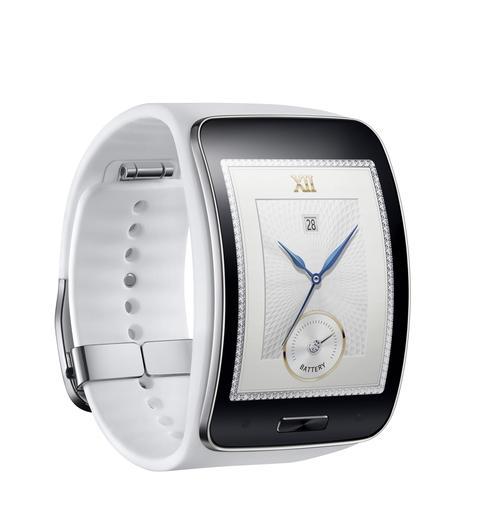
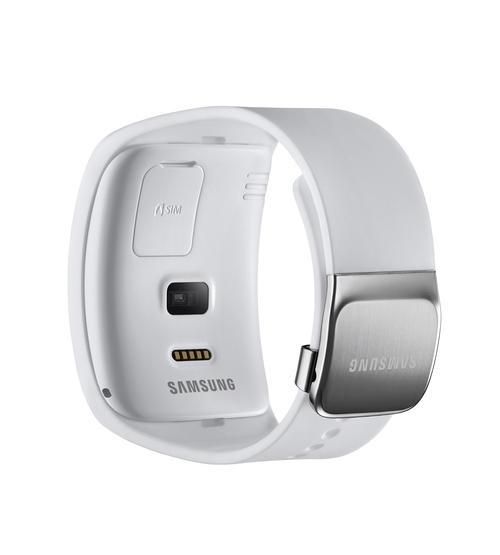
Samsung has added a new entry to its growing catalog of smartwatches with the debut of its Gear S.
Unlike its previous smartwatches, however, this one packs its own 3G data connection, which means it doesn’t have to be tied to your smartphone at all times. That’s a big deal for smartwatches.
Sporting a curved 2-inch display that wraps around your wrist, the Gear S looks more comfortable to wear — and more stylish — than Samsung’s rectangular watches. Still, with a larger display size than its stablemates, the Gear S is fairly bulky. The Gear S is thicker and taller than other Samsung smartwatches, which are already fairly thick and tall.
The big innovation here, though, is that you’ll be able to use the Gear S independently of your smartphone. You can send messages and receive and reply to notifications from their social networks and other apps via the watch’s S Voice controls or its onscreen keyboard, though we’re not sure how easy this will be to use. (Samsung has announced the new watch, but reporters have not yet used it.)
What’s more, you can make and receive calls from the watch. Samsung hasn’t announced which of the Big Four U.S. carriers will support the Gear S’s 3G connection, but we’ll update you when we find out more. If you don’t want to use the watch’s 3G connection, you can pair it with your smartphone via Bluetooth or jump on an available WiFi connection.
It will be interesting to see how long the Gear S’s battery lasts while connected to 3G. Most smartwatches, which do not feature cellular connections, last about a day; adding a 3G connection may drain that further.
The Gear S also includes turn-by-turn pedestrian navigation through HERE, news updates from the Financial Times’ fastFT, a heart-rate monitor, and Nike+ Running app integration. Unlike Samsung’s Gear Live, the Gear S doesn’t run on Google’s Android Wear operating system. Instead it runs on Samsung’s own Tizen-based OS, which means it won’t be able to run the same apps.  
The Gear S is part of Samsung’s apparent strategy to blanket the market with smartwatches. The S is the company’s sixth such device to hit the market, behind the Galaxy Gear, Gear 2, Gear 2 Neo, Gear Live, and Gear Fit.
Samsung Gear S smartwatch
Samsung’s announcement coincides with the unveiling of LG’s circular G Watch R that, in press images at least, looks like the most attractive smartwatch yet. In the coming weeks, we expect a slew of other companies to debut their own smartwatches, including Motorola and its Moto 360, ASUS and its ZenWatch, and, of course, Apple’s iWatch.
Samsung hasn’t announced pricing for the Gear S yet, but the company did say it will begin selling the watch in October.


With the LG G3, we're seeing a brand release a phone ahead of time in order to grab a foothold in an
industry that could be spiralling away from its grasp.
It's an odd thing to say considering we're talking about a manufacturer that launched one of the critically acclaimed phones of 2013, with the LG G2 impressing far more than most expected.
But that was months ago, and LG has realised that with Samsung, Sony and HTC all bringing out far superior models it can't wait until later in the year to catch up, so it's tried to race to the front of the pack with a previously-unseen step forward in screen technology.
If you need more evidence that this is a phone that LG has accelerated to launch, check out the changes it's made: removable battery, microSD slot, metallic frame and new, mature interface; in short, everything that was wrong with last year's model in the eyes of many.


So with that in mind, is the LG G3 the perfect smartphone?

Key features

There are a number of key features that LG is touting as new and improved this year with the G3, but none sticks out as prominently as the QHD screen. Some might think that this is four times the pixel count of an HD screen, and you'd be right to a degree.
But only if you're talking about 720p screens – if you're comparing the G3 to something like the Galaxy S5, that packs in two million pixels to the G3's 3.6 million. It's a lot sharper, sure, but anyone thinking it's going to be mindblowing will be disappointed.
LG G3 review
The big question here with the screen is: why do it? The official reason LG told me was it had done some research and had realised that Steve Jobs was wrong.
While it agreed he was right there was a limit to what the human eye can see in terms of sharpness, LG reckons that the way sight works means the Retina display isn't the top end. That's obvious anyway; the display on the Samsung Galaxy S5 or HTC One M8 is significantly sharper than that on the iPhone 5S, so there is more headroom.
But apparently there's another level still to attack, and that's just what it's done with the QHD screen. Where Samsung's offering 440ppi sharpness, the G3 has 538ppi, which is equivalent to high end glossy art books, which LG used as the benchmark of sharpness to aim at.
Dr RamChan Woo, head of smartphone planning for LG, told me that the idea was you need pixels to fill in the space between lines, to make something that sorts out the 'dead space', which is why it went for the upper limit to make everything look premium.
Now, here's the quandary: the screen is brilliant, no question. Internet browsing, looking at pictures, watching high-end video, is all awesome. But that's the exact same feeling I had with the G2, which also had a simply stunning screen.
It feels like the QHD screen is great to look at because LG knows how to make an amazing display, rather that offering a next level of sharpness that blows me away. I didn't feel that I was looking at something superior to the G2 in terms of screen quality, and with the larger heft and hit on battery life, I believe LG has gone too early with the technology just to make an impact.
Or possibly its not even early. Perhaps we just don't need QHD screens in our phones. The display isn't without problems either: tilt it left or right and the brightness drops off sharply, which makes sense when you consider how many pixels are packed in there.
It's unfair to criticise the QHD screen on the G3 – there's no doubt all high end smartphones will be using this technology in a year or so. But as a headline spec, it doesn't seem to add a huge amount to the G3, which is a shame as I was hoping to be looking at the next generation of picture quality on a phone.

New interface

When it came to listing the criticisms of the LG G2, the biggest problem was the interface. It was so cluttered that if you had the remote activated and received a message you had to scroll down to see it.
Compare that to the HTC One M8, and you've got nothing but the missive to check. On top of that, the G2 went for a really garish and cartoony look too, meaning it was hard to evangelise on a phone that was otherwise brilliant.
LG G3 review
The new interface on the LG G3 is a big improvement. Gone is the skeumorphism in favour of a new flat tile look. The icons are redesigned. The different applications have their own colour scheme for easy recognition and the colour palette is more muted than before.
It's a much more fluid system that shows LG has grown up, taking the problems of before and making it into a more intuitive way of navigating through the handset.
LG has definitely taken touches from HTC, Samsung and Apple with the new interface. The home screen features a separate section for the pedometer and tips videos (where Samsung's pointless magazine option is on the Galaxy S5), the colours are very similar to HTC's on the M8 and the flatter design owes more than a tip of the hat to Apple.
The interface is still a little cluttered, but overall it's a tick for LG updating something that sorely needed a new look.

Metallic shell

As mentioned the other big problem with the G2 was the fact it had a really glossy plastic shell. The phone was well packaged, but still didn't offer the same premium quality as the HTC One, iPhone or Sony Xperia Z1.
So with the LG G3, the South Korean brand has gone for the best of both worlds. It's created a 'metallic skin' that supposedly looks and feels premium, but offers the lower weight and added connectivity benefits of polycarbonate.
LG G3 review
It might look similar, but the feel in the hand is very different
The problem is, LG hasn't really managed this lofty goal. The G3 certainly looks the business, bringing a more iconic look of brushed metal and some cool colours (black, silver and gold) to make it stand out on the shelves, which makes sense given it's mostly screen otherwise.
But the second you pick it up, the plastic nature jars with the look of the phone, which is a disappointment. It actually feels cheaper than the G2 thanks to using a removable back, which lowers the tightness of the packaging and makes it feel more hollow.
The upside of this is you've got a removable battery and microSD slot, both of which are a big win for a certain section of the customer base. That said, there are better ways of doing this, as you can easily have a slot for a microSD card without needing to remove the back.
LG G3 review
The battery and back cover are both removable
And I know a few people disagree, but a unibody phone feels better in the hand and a portable battery pack is much more useful than being able to swap in a new battery - it's easier to charge, for one, and 98% of users will never swap the battery in and out anyway, so why bother when an integrated unit can offer more capacity and better design?
So again, LG has stepped forward with the G3 – but it's still not quite got all the pieces together when it comes to design.

Simple camera with laser autofocus

The 13MP camera on the LG G3 is also another big talking point, both in terms of the new look to the interface and the additional technology on board.
I'll start with the latter point: the laser auto focus, which is designed to make it the fastest-focusing smartphone on the market. It seems to be true at times, but I'm not sure shaving another 100 milliseconds off makes that much of a difference when boot-up speed is more important..
It's possibly a bit unfair to say that the extra speed isn't warranted – if the system worked perfectly, chances are you'd take 10-20 more high quality pictures that capture the moment compared to the competition, but without being able to fully test the system it's hard to comment.
The laser works by sending out a conical infra-red signal (using technology nabbed from a robo-vacuum cleaner from LG's home appliances division) and absorbs information from the surroundings to create an instant and clear picture for the camera to use.
This means it doesn't have to look for contrast shifts like before, and offers a sharper image.
The interface is really scaled back too: it's nothing more than a back button, a menu icon and the viewfinder. Tap the screen and it focuses and takes the picture, designed to be simple and effective.
LG G3 review
It also doesn't let you focus to check the shot composition before taking the photo, which would be nice – but then again, tap that menu icon and you get all you need in terms of shutter, options and video recording.
The G3 is all about simplification, and this kind of technology really works. It's a little too scaled back for the camera, but it's the right idea.
The front 2.1MP camera is now cringingly called the 'selfie' camera – it seems that dreaded word is here to stay, at least for a few years. The lens is a wider angle, so you can get more friends into the photo (or more actors at the Oscars) and features clever gesture recognition to take the photo.
Hold your hand out, make a fist and it'll start the G3 self-portrait timer. It's a clever system and it works, which is great for those moments when you can't use both hands and don't want to tap the screen.
Another cool feature is the ability to have a front-facing flash, although it's not an LED light. Instead, part of the screen goes white, which illuminates faces and takes better pictures. LG has even white balanced this screen to correct skin tone imperfections – and it really gives some nice front facing snaps.