Translate

Showing posts with label apple. Show all posts

Monday, September 8, 2014


At long last, we’re finally getting a glimpse at what the iWatch may look like. 9to5Mac points us to a new thread on Reddit’s Apple page that purportedly shows us several leaked components from the wearable device that Apple is set to unveil on Tuesday. The leaked components show that the device will feature a square face with rounded corners and a round circle in the center that’s been carved out for the heart rate sensor that will track users’ fitness activity.
Bz2ajzj

In addition to the watch’s chasis, the leaked pictures also show us the device’s speaker, mic bracket, speaker mesh, its BCM coil and much more.
The person who leaked the photos also gives us some key information about the watch’s specifications: It will purportedly include a microphone, a speaker, Siri integration, a “flexible multi-touch screen” that “will add a new dimension to the UI,” and a battery that will supposedly last all day. What’s more, the device won’t have any Lightning connector port, which strongly hints it will feature wireless charging.
More pictures of several iWatch components follow below.

hdw6ozA (1)
fFPLjVS 

Saturday, September 6, 2014


If you’ve been following the tech news, you probably know that Apple’s highly anticipated iWatch is
expected to make its debut Sept. 9, along with Apple’s new iPhone.
Based on the amount of hype this iWatch has generated, it could be the most important piece of consumer technology since the original iPhone launched in 2007, or the iPad in 2010.
But seriously: Why? What exactly will the iWatch be able to do? What will it look like? And more to the point: Why would Apple want to get into the wearables market, which, despite being loaded with a variety of offerings, isn’t nearly as robust as the smartphone market?
Below is a brief explainer about the iWatch, its raison d’être, and why Apple would want to even enter a market that’s still largely unproven. School is in session.
What’s an iWatch?In short, the iWatch is Apple’s long-rumored smartwatch that analysts and company watchers claim could put to bed all of those nagging rumors that Apple’s well of innovation has run dry.

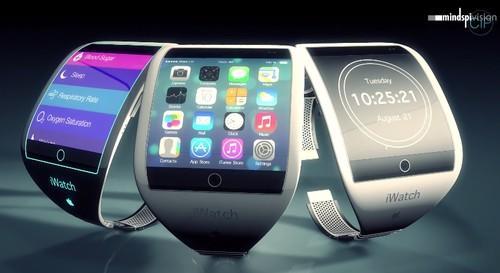
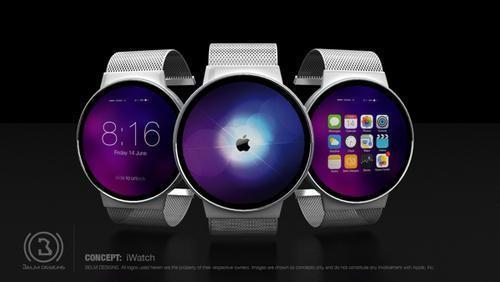
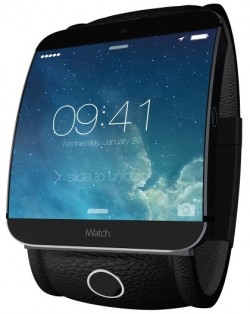
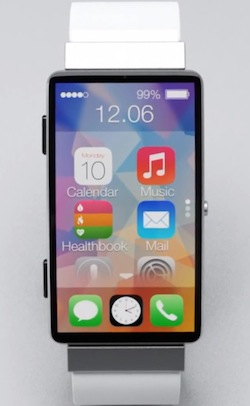
Artist's concept of the iWatch 
iWatch concept. (Belm Designs)

The watch itself is expected to feature a touchscreen and connect to your iPhone or iPad via Bluetooth and provide you with notifications from your favorite apps. So you’d be able to view messages from your phone without removing it from your pocket or walking across the room to retrieve it. It’s like having your smartphone screen on your wrist at all times.
Both The New York Times and The Wall Street Journal report that the iWatch will also have a near-field communication, or NFC, chip, which could be used to make wireless payments with the watch. To do so, you’d simply tap the iWatch on an NFC payment pad at a store’s checkout counter. The watch would then automatically pay for your items with money from the bank account you linked to the wearable. 
As a bonus, the iWatch is also expected to work as a kind of fitness and health tracker. You’ll also reportedly be able to track your steps via the watch’s built-in pedometer, see if you should slap on some sunblock via its UV monitor, and check out other fitness information through Apple’s upcoming HealthKit platform.
HealthKit?That’s right, HealthKit. Introduced at Apple’s Worldwide Developers Conference as part of iOS 8, HealthKit takes all the data from your disparate health and fitness apps and combines it into one convenient app on your iPhone’s home screen.
iPhone HealthKit app

That means you’ll be able to see your heart rate, the number of calories you burned in a day, how many hours you slept last night, your blood sugar, your cholesterol, and more.
HealthKit will also let your various fitness apps, like RunKeeper or MyFitnessPal, talk to one another and share your data to ensure that you get a clear picture of your overall health.
So why would Apple make an iWatch?The so-called “wearables” market is still in its infancy, but many tech analysts expect it to grow exponentially in the coming years. According to market research firm IDC, shipments of wearables will increase from 6.2 million in 2013 to 19.2 million by the end of 2014.

Artist's concept of the iWatch

As IDC’s Ramon Llamas notes, Apple is keenly aware of the huge numbers of apps downloaded from its App Store for the various fitness trackers and other wearables on the market. So why wouldn’t Apple want to get in on that itself?
iWatch concept. (Todd Hamilton)
There’s also the fact that the iWatch will be perfect for collecting anonymous data about its customers. That will give it, at the least, better information to sell more highly targeted ads.
“Wearables are the most intimate of devices,” Llamas explained. “These are things that you have on you nearly 24/7.
“There is a lot of information that Apple could collect about a user if they wear a watch,” he added. “There is a lot of gold in there to be harvested.”
Will it really be called the “iWatch”?Not necessarily! That’s just the name that tech watchers have given Apple’s smartwatch device, as a kind of shorthand. It could be called something else entirely.
OK, so what will the “iWatch” look like?Well, that’s the thing. There isn’t much known about how exactly the iWatch will look. Those renderings you see above are mere guesses, or fantasies, of Web artists. Unlike the iPhone 6, of which a new alleged prototype hits the Internet every day or so, no purported images of the iWatch have surfaced.
Our best guesses about how the iWatch will look come from Apple’s patent filings and reports citing unnamed sources. In February 2013, AppleInsider came across a patent Apple filed for a wearable device with a full-length screen that wraps around your wrist like a slap bracelet.

Line drawing from Apple's patent filing

In June, Reuters cited a source saying that the iWatch will have a 2.5-inch rectangular display that will be slightly raised above the watch’s band. Another report from Taiwan’s Economic Daily News claims that the iWatch will instead come in two screen sizes, 1.6 inches and 1.8 inches.
All of that is to say, the iWatch is still a pretty big mystery.
We’ll find out on Sept. 9 though, right?That’s the word on the street, yes. Multiple reports have indicated that Apple will unveil the iWatch along side the new iPhone 6. Unfortunately, other reports, including one from Re/code’s John Paczkowski, point to Apple holding off on sales of the iWatch until 2015.
What’s interesting is that we’ve seen neither hide nor hair of the iWatch yet. And in a world where new device designs, even those from Apple, are regularly leaked online, that’s quite an anomaly.
That likely means that the watch hasn’t gone into production, where it could be surreptitiously photographed and shared across the Web. That also jibes with rumors of production issues with the watch.
So what happens if the iWatch doesn’t debut on Sept. 9?I’ll eat my own shoes.
So stay tuned for our coverage of Apple’s big day, and get ready to see either the iWatch unveiled or a grown man eating his sneakers. Either way, it’ll be a fun show.
Email Daniel at dhowley@yahoo-inc.com; follow him on Twitter at @DanielHowley or on Google+ here.

Google stepped up its attack on the smartphone market on Tuesday, introducing a new touch-screen handset that is widely seen as a rival to Apple’s iPhone.
called Nexus One

Google also said that it would sell the Nexus One, which it called a superphone, exclusively through a new online store. Google, which earns the vast majority of its revenue from advertising, said it was dipping its toes in the direct retailing business not to reap profits from the sale of phones but to broaden the availability of handsets running its Android software.
“There is an opportunity to make some margin on the unit sales, but that’s not the objective here,” Andy Rubin, a vice president of engineering in charge of the Android technology, said during a press conference at Google’s headquarters here. “Our primary business is advertising.”
Consumers will be able to buy the Nexus One for $529 unlocked or for $179 with a two-year calling plan from T-Mobile. Google said that the Nexus One would be available on Verizon Wireless in the United States and on Vodafone in Europe later this year. It said it hoped to add other devices and carriers to the direct-to-consumer program in the future.
Some analysts said they were impressed by the speed of the Nexus One and by some of its capabilities. Google has voice-enabled all text boxes in the device, so a user can, for example, compose an e-mail message by speaking into the phone rather than typing. But they expressed disappointment that Google had not done more to shake up the industry by, for example, subsidizing the phone through profits from advertising.
“It would have been nice to see them roll out something really unique,” said Danny Sullivan, the editor of SearchEngineLand and a longtime Google analyst. “It is more evolutionary than revolutionary.”
The Nexus One, which was built by HTC, a Taiwanese electronics manufacturer, has a 3.7-inch screen and runs the latest version of Google’s Android operating system. At less than a half-inch thick and 4.6 ounces, it is slightly thinner and a tad lighter than the iPhone. It has a removable battery, a 5-megapixel camera with an LED flash and can shoot both still images and video.
Google executives called the Nexus One “exemplar” of what is possible with Android today. They said Google was pleased with the success of Android, which in little more than a year has grown from one device on one carrier to 20 devices with 59 carriers around the world. But they decided to work closely with HTC to design the best possible device based on its software.
The only person in the room who did not appear ready to concede that the Nexus One was the best Android device in the market was Sanjay Jha, the co-chief executive of Motorola, which recently introduced the Android-based Droid.
“I think the Nexus One is a good phone; I think the Droid is a good phone,” Mr. Jha said. But Mr. Jha appeared to embrace Google’s plan to market phones directly to consumers. “I see this potentially as an expansion of the marketplace,” he said.
Similarly, cellphone carriers appeared unperturbed by Google’s plan to sell unlocked phones directly to consumers. “We certainly welcome bringing more choices to the marketplace,” said John Taylor, a spokesman for Sprint. Jeffrey Nelson, a spokesman for Verizon Wireless, said his company was aware of Google’s plans for a store when it signed a broad cooperation agreement with Google.
For now, the Nexus One phone works only on cellular networks using the G.S.M. standard, which in the United States is used by AT&T and T-Mobile. It can run on AT&T’s network if the unlocked-phone owner has an AT&T SIM card, but it will work only on the older and slower EDGE network, not the faster 3G network, Google said.
The Nexus One has a high-speed 1-gigahertz Snapdragon chip from Qualcomm, which keeps multiple applications running quickly. It has some 3-D display capabilities, and Google collaborated with Cooliris, a Silicon Valley start-up, to incorporate that company’s technology, which showcases photos along a scrolling wall of images. Google also introduced a version of Google Earth that runs on the Nexus One.
“It looks like a really cool phone,” said Charles Golvin, an analyst with Forrester Research. “But it is not a game changer.”
Peter Chou, the chief executive of HTC, refused to disclose sales forecasts for the Nexus One, but he said that the device “pushes the limits of what’s possible on a mobile phone today.”
While the Nexus One may be a rival to the iPhone, Google and Apple are approaching the cellphone market with very different strategies: Apple makes money by selling phones and Google makes money by selling ads. But there is little doubt that the two companies are on a collision course.
If the Nexus One or other devices sold through Google’s store succeed, they could eat into the appeal of the iPhone. Meanwhile Apple said Tuesday that it had acquired Quattro Wireless, a mobile advertising start-up, indicating that it has plans to attack Google’s core advertising business. 


applecare_plus_icon
AppleCare+ for iPad, iPhone, and iPod is set to debut in Australia in the near future, perhaps ahead of the launch of the iPhone 6 in the country. According to a tipster who spoke to MacRumors, Apple Store employees in Australia are currently receiving training on the service.

AppleCare+ for iPhone originally launched in the U.S. in 2011, offering two years of extended warranty protection along with for two accidental damage incidents (with a $79 service fee).

The program expanded to include the iPad in 2012, and since then, Apple has rolled out AppleCare+ coverage in a number of countries including Canada, China, Japan, Singapore, Mexico, United Arab Emirates, and several countries across Europe.

Currently, customers in Australia are limited to standard AppleCare protection for the iPad and the iPhone, which provides two years of additional coverage but does not include accidental damage replacements. Pricing on AppleCare+ in Australia has not yet been divulged, but it will likely be similar to pricing in the United States, which is $99. 

Popular drugstores Walgreens and CVS are expected to partner with Apple on its upcoming mobile payments initiative, accepting purchases made with the company's new iPhone payment system, reports Re/code.
CVS and Walgreens are expected to accept purchases made with the new iPhone payment system, details of which Apple plans to announce Tuesday, according to a person briefed on the plans. With more than 15,000 locations combined, acceptance by the two chains will give Apple a huge footprint if all of their stores are involved.
Earlier this week, Apple was rumored to be partnering with retailer Nordstrom, leading to fears that its upcoming payments service would be limited to higher-end retailers, but it appears that Apple will also be aiming to sign deals with stores people visit regularly. As noted by Re/code, getting stores that people frequent on board could lead to quick acceptance of the new mobile payment service.

easypay_concept
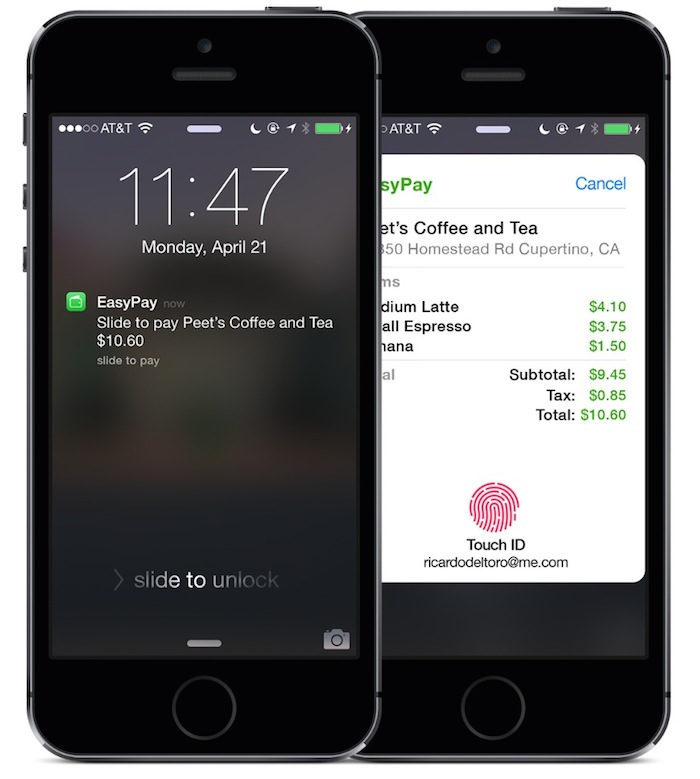
EasyPay mobile payments concept by Ricardo Del Toro
 
Re/code's report also divulges some information on how the system might work, allowing shoppers to "wave or tap" their iPhones at checkout terminals. The service is said to work over NFC, transmitting payment information from the phone when the device is near the store's checkout area. NFC may, however, be supplemented by other wireless technologies, and Touch ID is expected to be integrated into the system for added security.
Sources caution that Apple's payment system may in some cases employ additional wireless technologies either in conjunction with, or in place of, NFC. The new payment method will also likely include the use of fingerprint identification already available on the latest iPhones as an added security measure.
In addition to inking deals with various retailers to support the system, Apple has also established deals with major credit card companies Visa, MasterCard, and American Express, as well as credit card issuers.

Apple is expected to unveil its mobile payments service on Tuesday, along with the iPhone 6 and its much-anticipated wearable device. Both the iWatch and the iPhone 6 are said to play an important role in the new mobile payment service, as the two devices are rumored to include support for NFC. 
 

Friday, September 5, 2014

The entire freaking tech industry is falling down on the job, and Apple, my favorite company in the world, is
stumbling around too. What's worse is that it doesn't seem to care.
Apple is the most profitable consumer tech company in the world, with billions of dollars in the bank -- so much that it's in the middle of a US$130 billion effort to return profits to shareholders. Yet the company can't seem to be bothered to imagine that iCloud user accounts could be compromised by brute force password attacks launched with a Python script offered up on GitHub?
As the nude celebrity photo hacking scandal unraveled over the last few days, Apple's iCloud services initially were the target of blame. Tech experts suspected that perhaps a flaw in Apple's Find My iPhone service let hackers repeatedly try to guess a user's password in order to crack the front door to Jennifer Lawrence's iCloud account -- and the iCloud accounts of other celebrities.
It turns out that particular flaw doesn't seem to have been used by the celebrity hackers, but it is this revelation -- not the boobies or bottom of some A-list celebrity -- that has caught my attention. 

Apple's Blinders

Let's get this straight: A hacker could gain access to an Apple customer's iCloud account by brute-force guessing a password? How is that possible in 2014? How did Apple not think of this? How could a massive blast of failed password attempts go unnoticed and not generate some sort of secure response?
I find that utterly mind boggling.
Sure, after the backside of Jennifer Lawrence was posted on image-sharing boards and forums, someone woke up at Apple and fixed the vulnerability.
Great. But it gets worse.
Apple, it turns out, released a company statement that claims that the iCloud accounts were hacked through more traditional efforts -- that the celebrity accounts were compromised after a very targeted attack on user names, passwords, and security questions. So through a certain amount of social engineering, phishing or guessing, iCloud accounts were compromised.
Oh, ok. There wasn't an actual breach in this case -- it was just some high-profile women -- who probably don't usually share their Apple ID or email address very often -- who were compromised.
The basic message from Apple sounds like this: It's all good in iPhone AppleLand folks, nothing to see here. Move along. Oh, and check out this obscure support page on our site where we advise all users to always use a strong password and enable two-step verification, which we've already clearly addressed.
Talk about tone deaf. The fact is, security is hard, and Apple would rather avoid the issue rather than stare it in the face and fix it. Or maybe it's all just about "hard choices," like choosing convenience over security. And Apple enables some security but errors toward the convenience that sells iPhones.
This is understandable, except that Apple's security system is barely serviceable. Apple's two-factor authentication isn't even used to protect all iCloud services. Once hackers obtain an iCloud password, they can easily view all sorts of photos and documents.
It gets worse: They can also download backups of your entire iPhone that were created months ago. In this way, a photo that you took while romping in the bedroom with your spouse -- giggled over, kept for a few days to remind you of good times, and then deleted -- can live on. This may have been the way Mary Winstead's were pulled from the so-called trash to gain new life on the Internet. Nice.
While Apple might not care about nipple shots, you would think the company would care deeply about corporate security and enterprise security. The celebrity hackers were after naked pics, but what if they were after infrastructure information about our nation's hydroelectric dams? Once a hacker breaks into an iPhone via Find My iPhone -- uh, doesn't that give a person location awareness of your iPhone? Like where you live? Where you go? Where you are right this minute?
I am so disappointed in Apple.

Excuses, Excuses, Excuses

Of course, if you think about the iCloud backup of your iPhone, what's the greater good? Apple's easy iCloud backup service helps thousands of people retrieve their entire iPhone after they break their iPhones. In this way, their photos are all saved. For example, a young single mother can have only one computing device, an iPhone, and back up all of her wonderful baby photos simply by using iCloud. That's marvelous, right?
Yup.
Until someone gets obsessed with her child. Until someone figures our her Apple ID, which easily could be her email address. Suddenly her daughter's bathtime photos are being trafficked on shady bulletin boards or backwater channels -- maybe for years -- while she doesn't even know her iCloud account has been compromised. Or that the hacker knows where she is. This particular danger isn't limited to Apple, but I expect a helluva lot more out of Apple than I do other companies.
The thing is, what the naked celebrity pics have really revealed is that there are all sorts of tools and hackers for hire readily available to accept a little bitcoin to crack into a person's iCloud account and download everything.
Here is a another example: If your daughter's ex-boyfriend knows her iCloud ID -- and he's an ex-boyfriend for a good reason -- it's not a leap that he could buy some tools or pay someone in a foreign country to crack into her iCloud account so he can retrieve the naughty pics they took before they broke up -- or anything else.
Nic Cubrilovic dove into the dark underworld of celebrity data theft and found a loose organization of hackers, collectors and distributors:
"The frequent source of new leads for targets seems to be newcomers who know somebody they want to hack and have stumbled onto one of the networks offering services via search terms or a forum they frequent. The new contributor will offer up a Facebook profile link, plus as much information as is required by the hacker to break the account, plus possible assistance in getting a RAT installed if required. "In exchange the hacker and ripped will supply the person providing the lead with a copy of the extracted data, which they will also keep for themselves. This was one of the most unsettling aspects of these networks to me -- knowing there are people out there who are turning over data on friends in their social networks in exchange for getting a dump of their private data."
Is one teenager's stupid selfie, distributed across a high school, any less damaging than Jennifer Lawrence's silly naked pose?
So what do I expect? Is it Apple's job to prevent every bad guy from doing bad things?
I can get all righteous about this, but the fact remains that many users don't even come close to managing their own security with any reasonable measure of responsibility. Their password is "123abc" and they use it for everything. If they choose to answer a security question, do they actually use a true answer that they will remember? Some of Apple's so-called security questions include the first name of your best friend from high school. Find a few yearbooks online, figure out who is in photos together with your target, and boom, there's an answer. How about your favorite sports team? Step through a series of tweets and it'll likely appear. Or guess the hometown teams.
This stuff is barely there security. More the point, the tech experts and security pros seem to think it's the fault of users for not coming up with -- and remembering -- made-up false answers.
What's the name of your best friend from high school? Huckleberry Sticker Wrench. That's tough to guess, right? It's also tough to remember -- and it assumes that everyone has a safe place to write this stuff down. Does a college kid who lives in a dorm with three other kids have a safe place? Not exactly. Never mind people who have more difficult lives than your average middle-class American.

It's the User's Fault!

In fact, the whole username and password system sucks, but somehow the attention goes less toward the system and tools and more toward how to deal with the system. All the ridiculous trappings tech companies and security professionals add to the username and password system don't make it suck any less. Make your combinations unique. Make them ridiculously long. Make them more complicated. Change them frequently. Give false answers to security questions. Remember everything -- but not in a place where someone else can find your list.
These are the recommendations for millions of people in 2014? When you stop and think about it, we put human beings on the moon in 1969 -- and brought them back safely to Earth. And we can't somehow manage to figure out how to delete a naked bedroom pic taken among consenting adults so it's actually deleted?
So what's the answer? Better biometric ways of identification, like Touch ID? Think about it: It's one thing to have Touch ID data resident on a device in your control. It's another thing to let that information hang out on Apple's iCloud servers, which we've already seen aren't secure -- in 2014 -- against even unimaginative password-guessing scripts. And if you lose your iPhone with Touch ID, does that mean you have to find a new Touch ID reader somewhere?
You could walk into an Apple Retail Store, place both hands on the counter to scan them, as well as a get a map of your eyes, and step up for a quick dose of radiation for a dental x-ray, and make it much harder to crack into your accounts -- but who wants that?
You want an RFID tag inserted into your palm? A special iRing device? A sticker? An iWatch as a secondary key? An Apple TV in your home?
So how do you make something secure that's easy to use and that's convenient for millions of people who live in widely different conditions around the world?
I don't know... but I sure as heck expect Apple to figure it out. Why? Apple is the most profitable company. It has the most money and nearly infinite resources. It controls most every portion of its magical ecosystem -- the hardware, the software, the services.
Why can't Apple do a better job with security? Why can't Apple come up with a better way?
Why can't Apple launch a marketing campaign to educate millions of consumers on how to use security properly -- and tell its customers, in no uncertain terms, exactly what is covered, how it is covered, and for how long it might sit somewhere on some server in the sky dormant until someone with power or guile comes after it?
Is this a lack of corporate will? Sure as heck seems like it.
What do we have coming this fall from Apple? HomeKit, so Apple devices can manage Internet-connected home automation appliances and devices. HealthKit, so Apple devices and apps can know you more personally than ever -- and communicate with doctors and such. CarPlay, so iOS can be in your car, too. What's Apple's answer here? Are the keys to your kingdom all riding on one password? On some dumb security questions? On two-factor authentication that isn't even invoked when someone wants to download the entire contents of your backed-up iPhone?
Wow.
The thing is, I want Apple to have better answers. I think Apple has the resources it needs to create better answers. If you took, say, a billion dollars of spare cash, do you think you could come up with some better solutions? I'm guessing that more than a few readers could make some improvements to consumer security with a billion-dollar budget. I don't believe that Apple cares enough to find the answers.
What's worse is that Apple also has the power and resources needed to influence the social aspects of security to create industry change. Apple can spends tens of millions of dollars on slick television ads that inspire people to create their own "verse" and yet can't even create a damn video that walks a customer through two-factor authentication?
Oh, wait, Apple already addressed security here. And if you notice the little link, Apple also already addressed two-step verification for your Apple ID in an FAQ here.
There are a lot of ways Apple could improve security. If we're lucky, the brouhaha over high-profile celebrity nakedness might be the kick in the pants Apple needs to get innovative and easy with security. I can't think of any company better positioned to get the job done. Like I said, Apple controls the entire product stack: hardware, software, and services.


Thursday, September 4, 2014

iWatch Rumors: Design Concept 


A few days ago, Samsung unveiled the Gear S, a brand new Tizen-powered smartwatch that happens to have smartphone features thanks to its embedded SIM, and comes with a large, square, curved display. Apple is expected to unveil the iWatch next week during its iPhone 6 event, and designer Martin Hajek – who has provided various iPhone 6 renders based on recent leaks – has imagined what the iOS smartwatch would look like.
Hajek’s iWatch version is somewhat similar to the Gear S, as it’s also packing a square, curvy display. However, the device also has a camera and multiple buttons, akin to what is found on an iPhone. The designer also seems to think the device will have a metal body just like the iPhone, and hence require plastic antenna inserts to connect to the iPhone.
Obviously, the smarwatch shown in Hajek’s render is just a concept that has nothing to do with Apple’s actual iWatch design. Notably, unlike recent iPhone 6 renders from the same designer that were based on the many iPhone 6 leaks all revealing the same design lines for the upcoming iPhone model, Hajek did not have any iWatch leaks at his disposal for inspiration, as the actual design of the device has not been leaked yet.
Images showing this curved iWatch design follow below, with more available at the source link.


Wednesday, September 3, 2014

Before the iWatch there was...

Posted by Unknown | 10:14 AM Categories: , ,
(CNN) -- After years hovering in the vapor, little more than a dream for Apple fanatics everywhere, the
elusive iWatch may be days away from becoming a reality.
But it will hardly be the first smartwatch to hit the market. After breaking ground with products like the iPhone and iPad, Apple finds itself playing catch-up in the wearables world.
The Pebble watch was the first smartwatch to gain any kind of notoriety. In 2012, the smartwatch pulled in more than $10 million on Kickstarter. Pebble connects to an iPhone or Android phone via Bluetooth and has
Smartwatches have become much more feature-rich since the launch of the Pebble.
Samsung leads the pack in jack-of-all-trades smartwatches. A year after releasing its first smartwatch, Samsung unveiled its third device in the line last week. The Gear S smartwatch has a curved screen and 3G connectivity, making it the first smartwatch from a major company that doesn't require a Bluetooth connection to a smartphone.
There's also the LG G Watch R and Moto 360, two newish devices that are aiming to have a more fashionable design and take advantage of Google's Android Wear platform.
So far, smartwatches haven't caught on widely in the way smartphones and tablets have. Whether Apple's entry into the field changes that remains to be seen.
Apple was granted a patent for a smartwatch in July -- with a touch screen, an accelerometer, a GPS receiver, Bluetooth and alerts via vibration. The iWatch in the patent connects to a mobile device, displays notifications and allows users to accept or decline phone calls.
Apple is expected to unveil its iWatch smartwatch on September 9.

Tuesday, September 2, 2014

Swatch watchesSwatch is responding to the advent of the wearable technology industry with a new product of its own
named the Swatch Touch.

The biggest watchmaker in the world is seeing the rise of smartwatches not as a threat but as a new opportunity for the company, with the smartwatch market's worth potentially reaching up to $93 billion.
Smartwatches are a part of the wearable gadgets trend that has devices connecting with user's smartphones for shared functionalities such as checking emails, making calls and monitoring health-related data. The devices are seen as the next big thing in the tech industry and potential threats to the traditional wristwatches that Swatch is known for.
Swatch's response to the smartwatch trend is that it will be launching watches with so-called "smart" features, starting with the unveiling of the Swatch Touch in summer of next year.
According to Nick Hayek, the CEO of Swatch, the new watches that the company will be releasing will provide the user with a counter for steps taken and calories burned. The watches will also be featuring several new features that will utilize Bluetooth technology.
"All the big technology firms want to work with us and I don't rule out that we are or could be collaborating in some areas. But we can also do many things on our own," Hayek said in an interview at Swatch's headquarters in Biel.
Swatch's announcement comes about a week before Apple's planned Sept. 9 event, when it is rumored that the company will be unveiling the iPhone 6 and Apple's first entry into the smartwatch market.
A report stated that the iWatch may have a price tag of $400, with the smartwatch coming with a touchscreen, Bluetooth transceivers, a GPS receiver and an accelerometer.
Apple's iWatch is partly the reason why the prices of shares of Swatch this year have decreased by almost 15 percent.
"For Swatch, this could mean a 2 percent hit to revenue and earnings before interest and tax for each 10 percent share that the iWatch was able to gain in its addressable market," said Bernstein analyst Mario Ortelli in July.
Collaboration between Swatch and Apple are seen by many analysts as a great business partnership for a smartwatch, but Swatch has never expressed immense interest in such a team up. This is because the company believes that it should stick with what it has been known for.
"Our first message for customers is the watch. If they like it, they might also be interested in the extra functions," said Hayek. "It is a problem if you only define a product by its technology. Technology alone doesn't sell, not in watches."

If you like this article, please LIKE and SHARE.

HTC One E8

Sprint has finally announced that it will be carrying the HTC One E8, which is immediately available to those who want it.
The E8 is extremely similar to the HTC One M8, with only a few key differences making this device much more affordable.
The E8 sports the same 2.3-GHz quad-core Snapdragon 801 processor, the same 2 GB of RAM, and the same 2,600 mAh battery. It even includes the same display as its more expensive brother.
Because of those features, internally the E8 is a replica of the M8. But externally, there are a few differences. One of the biggest differences users will notice about the E8 is the fact that it has a plastic body rather than the metal one found on the One M8. While this certainly does make the phone look a little cheaper, the device still has a premium look to it and for many, the compromise on body material is worth the money that it saves.
The plastic body is not the only thing that's different than the M8. Another large difference is the rear-facing camera. While the M8 comes with a twin-sensor 4-megapixel Duo Camera, the E8 comes with a single 13-megapixel camera.
Often when mobile device manufacturers release "budget" versions of their flagship device, storage is one of the first things to go. Thankfully, that is not the case with the E8. The One E8 includes 16 GB of internal storage, which is expandable to up to 128 GB, thanks to the microSD card slot.
The one E8 ships with Android 4.4.2 KitKat along with HTC Sense 6.0 user interface.
As far as price goes for the device, Sprint has a number of options. Users can simply front $500 for the device with no obligations. This is $150 less than the M8. Apart from that, users can choose Sprint's Easy Pay, and pay $20.84 per month for two years. Finally, users can pay $100 upfront with a two-year contract.
As far as color goes, users currently have a choice between Polar White or Misty Gray. The device is initially only available online. However, Sprint says that it will be available in stores in the coming weeks.
Sprint has had a busy few weeks as far as announcements go. The carrier recently announced a new unlimited plan for $60, in direct competition with T-Mobile's plan that offers the same services for $80. These moves have ignited somewhat of a price war between mobile carriers in the U.S.

iPhone
Rumors have been circulating that Apple's iPhone 6 will feature near field communication payment capabilities. A rumor that comes up every time that Apple will be releasing a new version of its flagship mobile phone.
Apple has interestingly not entered the mobile payments field, despite its competitors already doing so with Google Wallet, Square and Isis.
NFC has long been rumored to be included in the iPhone, but the technology has not made it into the smartphone's production models. Pictures of the iPhone 5 that showed an unknown component connected to the device's logic board was thought to signify NFC support, but the component turned out to be an ear speaker.
However, Apple's decision not to include NFC technology in the iPhone may be due to the fact that it is working on something else entirely, namely a mobile payments system that relied on the iBeacon combination of Wi-Fi and Bluetooth.
Sources say that Apple will be featuring its own payment platform on the iPhone 6, and that the platform will be one of the smartphone's hallmark features upon its unveiling on Apple's Sept. 9 event.
Apple is currently already in prime position to launch its own mobile payment platform, especially with the millions of credit card information that the company already safeguards that are linked to the iTunes accounts of Apple users. 
Past moves by Apple also point to the fact that the company is gearing itself up to enter the mobile payments market. Over the years, Apple has filed several patents that are connected to a mobile wallet platform. One patent, which was published in January, discussed the methods through which dual wireless protocols such as Bluetooth and NFC can be connected to complete transaction, with confidential information being safely stored in a "secure element" within the hardware of a mobile device. Another patent filed by Apple discusses a payment system that knows the context and location of the user's purchase, allowing the system to offer the user with relevant options such as coupons and rewards cards.
With the millions of devices using the iOS, having the iPhone 6 that feature its own mobile payment system will present a huge opportunity for Apple to expand the services that the company and its smartphone offer.
The iPhone 6 is also said to come in two sizes, with a 4.7-inch model and a 5.5-inch model. The new generation iPhone is set to be unveiled on Sept. 9, perhaps with the much-anticipated iWatch.


After years of rumors, leaks, and false starts, it seems the stars will finally swing into alignment this fall: Apple
is will unveil an iWatch smartwatch alongside a new large-screen iPhone 6 at an event on September 9, according to the latest reports. Presumably the iWatch will also be released to the public alongside the iPhone 6 a week or two later. Previous rumors had pointed to an October unveil for the iWatch, but it seems Apple has moved it forward — possibly in response to the Samsung Gear S, LG G Watch R, and the Moto 360, all of which will be released over the next month or two. Just as the iPhone and iPad popularized the smartphone and tablet, will the arrival of the iWatch signal the beginning of the wearable computing revolution?
Over the last couple of months, Apple’s (AAPL) stock price has been buoyed by Wall Street’s belief that, at long last, a new segment-defining device was on its way. Last week Apple’s stock price finally rose back above its September 2012 peak. It would seem that, after a couple of years of uncertainty — the echo of Steve Jobs’ death, essentially — the stock market finally thinks that Apple is ready to do more than just squeeze its iPhone cash cow for billions of dollars in profits every quarter.

Apple's rising stock value, since May
Apple’s rising stock value, since May [Source: Yahoo]
 
Enter the iWatch, which has been rumored (or perhaps wishfully speculated is a better term) since 2010. The funny thing is, despite Recode’s confirmation that the iWatch is coming in September (and Recode is pretty good with Apple leaks), we know virtually nothing about what Apple’s smartwatch will actually do or look like. We don’t even know if it’ll be an iWatch — something akin to an iPod Nano with a wrist strap — or if it’ll be more of a health-and-fitness iBand. It’s pretty safe to assume that the iWatch/iBand will tie into iOS 8 features such as Health and HealthKit.
Ultimately, the big question is whether the iWatch will be a full-fat device that runs iOS  8 — or a companion device that perhaps runs a cut-down OS for improved battery life, and requires a nearby iPhone/iPad for connectivity and other heavy lifting. In either case, even in the wake of the 3G Samsung Gear S, I don’t think we’ll see a truly standalone iWatch with 3G/4G connectivity. If Apple does release an iWatch in September, I’m pretty certain that extended battery life will be one of the key differentiators that Apple offers over the Android competition — and it just isn’t possible to offer 3G/4G and long battery life in a smartwatch form factor (yet).
Apple iWatch/iBand concept
Will the iWatch be a smartwatch, or more of an iBand fitness band?
Will the iWatch kickstart the wearable computing revolution? After Google Glass and Samsung’s early smartwatches have established a beachhead, will Apple swoop in and mop up the glory show everyone else how it’s done? I think it’s unlikely — I just don’t think battery, processor, and radio technologies are there yet – but I’m happy to be proved wrong. I think it’s much more likely that Apple is reacting to the competition, rather than tapping the same well of innovation that resulted in the iPhone and iPad. (The large-screen iPhones are reactionary rather than revolutionary, too.)

iWatch concept claw
One of the crazier pieces of fan-made iWatch concept art

In my eyes, it is surprising that we know so little about the iWatch this close to its (apparent) release date. Bear in mind that the iWatch will reportedly appear alongside the iPhone 6 on September 9 — and while we know almost everything about the iPhone 6, we know nothing about the iWatch. If Apple really is gearing up to release the iWatch, there will be production lines in China producing millions of units right now. It’s possible that Apple and its manufacturing partners have somehow kept the iWatch production line completely locked down, but it seems unlikely.
In any case, I guess we’ll find out on September 9. The iWatch is expected to be unveiled alongside the iPhone 6, which will come in 4.7-inch and 5.5-inch flavors. Pricing is anybody’s guess right now, depending on whether it’s a full-fat iWatch or cut-down iBand — but somewhere between $200 and $400 sounds about right. Official invites to Apple’s September 9 event should be sent out in the next few days.

Link>>
Apple's iWatch has reached the "engineering verification test" (EVT) stage of development and will likelyDigitimes. While components for the device are said to be in production, source close to the matter stated that the device must also head to production verification testing (PVT) before entering mass production.

Digitimes also claims that Apple is "unlikely" to unveil the iWatch during its upcoming September 9 media event, which contrasts reports from the likes of Re/code and Bloomberg last week stating that the device would be introduced alongside the iPhone 6. A previous report suggested that Apple would be debuting the device at an October event, but Re/code noted that the company later ended up changing its plans.

However, reports of an early 2015 launch for the iWatch has been suggested by a number of sources, as part leaks for the device have also been non-existent to this point. Recent rumors have suggested the device will include an array of sensors to track health and fitness-related metrics, and will be positioned as an iPhone accessory that tightly integrates with iOS 8.
beginning shipping in 2015, according to a new report from

Link...

Because you can never have enough apps in your life, we’ve decided to comb through a recent thread of Android app recommendations over at Reddit’s Android community and pluck out the best gems for your enjoyment. Some of these apps have been out for a while but some of them are brand new so don’t be shocked if they come with bugs. That said, they’re all highly rated and you can be sure the developers will issue patches to fix any reported issues people may find. And without further ado, here are five more terrific Android apps you may never have heard of.
new

Moon+ Reader Pro

moon-reader

Moon+ Reader Pro is a widely acclaimed book reader app that’s won praise for its customization options that will let you change an ebook’s fonts, margins and much more. Unlike the other apps mentioned here, Moon+ Reader Pro will cost you $4.99 but for the more than 50,000 people who have installed it, it seems worthwhile.
Better designed book reader with powerful controls & full functions, supports epub, pdf, mobi, chm, cbr, cbz, umd, fb2, txt, html, rar, zip or OPDS formats.
☀Additional benefits in pro version:
✔ Ad-free, faster & smoother
✔ Shake the phone to speak (Text-to-speech, TTS engine support)
✔ PDF support, fast & speech compatible
✔ Reading statistics function
✔ More beautiful themes, background images and fonts
✔ Customize reader bar function
✔ Headset & Bluetooth keys control
✔ Multi-point touch support
✔ Option for password protection at startup
✔ Book to home screen shortcut
✔ Annotations, highlights & bookmarks share support
✔ Open/Backup/Sync/Download/Upload book files via Dropbox/GDrive
✔ Widget shelf support, group your favorite books, put them to desktop as widget
✔ Tilt to turn page with customized actions
✔ Customer email support
☀PDF features in Pro version:
✔ Fill out PDF Form
✔ Highlight, annotation, handwriting
✔ Smart scroll lock, smooth reading experience
✔ Night mode support, 6 additional pdf themes available
✔ Dual-page mode for landscape screen
✔ Speech, auto-scroll compatible
✔ Read statistics, sync, flip animation available
☆The key features:
• Support online ebook libraries and personal calibre ebook server.
• Read local books with smooth scroll and tons of innovation.
☆Standard functions:
• Full visual options: line space, font scale, bold, italic, shadow, alpha colors, fading edge etc.
• 10+ themes embedded, includes Day & Night mode switcher.
• Various types of paging: touch screen, volume keys or even camera, search or back keys.
• 24 customized operations (screen click, swipe gesture, hardware keys), apply to 15 customized events: search, bookmark, themes, navigation, font size and more.
• 5 auto-scroll modes: rolling blind mode; by pixel, by line or by page. Real-time speed control.
• Adjust the brightness by sliding your finger along the left edge of the screen, gesture commands supported.
• Intelligent paragraph; indent paragraph; trim unwanted blank spaces and lines options.
• Keep your eyes health options for long-time reading.
• Real page turning effect with customized speed/color/transparent; 5 page flip animations.
• My Bookshelf design: Favorites, Downloads, Authors, Tags; self bookcover, search, import supported.
• Justified text alignment, hyphenation mode supported.
• Dual page mode for landscape screen.
• Support all four screen orientations.
• EPUB3 multimedia content support (video and audio), popup footnote support
• Backup/Restore options to cloud via DropBox, sync reading positions between phones and tablets.
• Highlight, Annotation, Dictionary (Offline or Online, support ColorDict, GoldenDict, Fora, ABBYY Lingvo, etc.), Translation, Share functions all in moon+ ebook reader.

Duet

duet

Forget Flappy Bird — Duet is the sort of hugely addictive game that really deserves to become an overnight sensation. The premise of the game is incredibly simple — you have two spheres that you can manipulate and move around to make sure they avoid any oncoming objects as they move upward.
Enter a mesmerising trance of co-dependence in Duet. The rules are simple: control two vessels in sync, survive against all odds and keep calm.
Your survival is dependent on protecting two vessels – they are devices in sync, a dance and song between two entities tethered together in symbiosis. Feel edge of your seat terror where the world around you becomes quiet and numb as all that matters is the game living between your palms — that is Duet.
% EIGHT CHAPTERS
Experience eight chapters of deceptive narrative and nerve-twisting gameplay. Replay any stage to perfect your movements and unlock over 25 achievements. This is a game that will test you. Unlock the Survival mode, Daily Challenges and four additional chapters of bonus challenges.
% PERFECT GAMEPLAY
With air tight controls and gameplay that’s tuned to perfection Duet provides the perfect balance between challenge and pure gaming satisfaction. Touch either side of the screen to twist your vessels and avoid everything in your path. Remember: even that which begins simple can end complex.
% HYPNOTIC AUDIO
An outstanding handcrafted soundtrack by Melbourne composer and Gotye multi-instrumentalist Tim Shiel. Nine unique and mesmerizingly beautiful compositions ensure an immersive experience for you at every step of your journey.
% FULLY FEATURED
- Full Google Play Game Services sync support – sync your progress across all your devices.
– Phones and Tablet support – play everywhere.
– Compete with Google Play Game Services across the Survival mode and Daily Challenges leaderboards.
% GO PREMIUM
Duet is free to download and play with some advertisements between gameplay. However, you may pay a once-off in-app purchase to unlock “Duet Premium”. This will remove all advertisements from the game, unlock Survival mode for endless score chasing delight, the Daily Challenges feature and four bonus challenge chapters. You will also help support more independent development of video games.

Music Control

music-control

As its name suggests, Music Control is a very simple moveable widget that will give you the ability to control whatever music is playing on your phone across multiple apps, whether it’s on Spotify, on the Google Play Store or just a song that’s on your device. The app seems to be very new, so don’t expect it to be perfect and its developer is asking for user feedback. That said, it seems very promising.
With this application you can control the running music on your device very easy.
It opens a window thas overlays on top of all other apps (also games) and can be moved completly free.
Supports many mediaplayers such as Play Music, Spotify or Apollo.
- Display track infomation, also artwork
– Change track from anywhere
– Window opens automaticaly on music start or headphone event
– Minimized mode which starts by an double touch outside of the window

Ultimate Android L Lockscreen

ultimate-android-lockscreen

If you can’t wait for Android L to come out — and given issues of Android fragmentation, you may be waiting for a long time — then you might want to get at least a taste of what’s to come with the Ultimate Android L Lockscreen. Essentially, this is an Android L lockscreen simulator based on the Android 4.4 API that will give you access to Android L-style lockscreen notifications. This is a beta release of the app so, like with Music Control, you should be aware that it will likely have its share of bugs at the start.
Features :
• Lockscreen Notifications!
• Using Android 4.4 API
• Swipe Lockscreen up for music controls
• Swipe Lockscreen down to unlock
• Swipe Lockscreen right for quick Camera access
• Swipe Lockscreen left for quick Phone access
• Setup a Pin code to stop friends from unlocking!
• Real Android L font
•Design based on android L 5.0
Customization includes vibrate on press, show next alarm at quick glance .
Please keep in mind that this is a beta release so bugs can be expected.
More features coming soon!

Algeo graphing calculator

algeo-graphing-calculator

And finally, the Algeo graphing calculator is a well received graphing calculator app for people who want to do more advanced mathematics on their smartphones.
It has the best graphing experience available on the Play Store.
Draw functions, find intersections and show a table of values of the functions with an easy to use interface.
Use the following unique features to help you with your Calculus and Algebra class:
*Symbolic Differentiation
*Definite Integrals
*Calculate Taylor-series
*Solve Equations
Algeo has every feature a scientific calculator needs:
*Trigonometric and Hyperbolic Functions
*Radians and Degree Support
*Result History
*Variables
*Scientific Notation
*Supports Landscape Mode

Link>>
There was a time when Googling for “how to erase background in Photoshop” meant something. Buddingprocess was complicated. It required supremely expensive software, plenty of time for research, and the patience of Job. But it was easier than doing it by hand, so we were grateful.
graphical wizards understood that software existed to accomplish fantastical things such as removing a background and coloring it with something else, but the
I also recall quite vividly the first time I set out to slice a segment of an MP3 I had in order to create a ringtone. I wasn’t keen on paying $0.99 for the convenience of having some store deliver the clip in question directly to my phone, so I did what everyone else did: I searched for a how-to guide. The results were many, and the tactics varied considerably. Eventually, I discovered a successful mixture of freeware, filename changing, and syncing luck that generated a sizable grin. Now, there are not only apps that’ll do this in a fraction of a second, but there are websites that tell you what apps are similar to ones that you download and aren’t perfectly fond of.
In a sense, software has continually evolved to make our lives easier. The latest iteration of Photoshop is arguably easier to wield than the first one. What were once manual processes in Microsoft Excel can now be batched and automated without relying on third-party plug-ins or coding knowledge. But the creation of mobile app ecosystems has taken this concept to an entirely different level. In fact, I’m confident that part of the smartphone’s rise to success is due to the commoditization and simplification of software. Computer programs used to scare all but the technologically inclined; now, they’re as approachable as a phone dialer.

app-sunset

A major trend in the simplification of software is unbundling. While Microsoft has long hawked its entire Office Suite, app ecosystems have made it possible for curious consumers to search for (and find) programs that do precious little. Need an app that just views PDFs? How’s about one that lets you digitally sign a real estate document? What if you need a mapping application only for those times when you’re overseas and offline, and a different one for your connected journeys across domestic soil?
While there are certainly suites that encompass each of these tasks, the app has made it possible for devs to serve extremely specific needs. Those comfortable wading around in menus and navigational mazes wouldn’t mind a routing program that combined online and offline modes, but for those just dipping their toes into this universe, having specific apps for specific purposes is just so much less daunting.

fake-phones

The top 25 apps in the United States are all fairly predictable, and it gets really disassociated after that. In my view, the struggle for an app to reach critical mass is part of why apps (and phones in general) are surging in popularity across regions, income levels, and everything else. The ease and ability to download yet another app to address yet another immediate concern is allowing devs to create one-off programs that answer simple questions. That solve simple problems.
In fact, one has to wonder how much longer we’ll be leaning on the Photoshop we know and love. At some point, the mobile version is going become the dominant one, with more “traditional” software being reserved only for universities, institutes, and sector professionals. My gut tells me “some point” is far closer than anyone would’ve guessed just a couple of years ago.

Samsung is set to inject more life to its dwindling sales with its innovative wearable, which is the Samsung
Galaxy Gear 2.
Carrying a price tag of $369, the Galaxy Gear 2 is expected to be loaded with more features than its predecessor.
The highly-touted smartwatch is beefed up with a camera that is perfect for taking images and videos, receive and make calls from your wrist, water-proof battery that can last for days and among others.
The drawback of the device, however, is that it appears quite bulky and is compatible only with mobile phones from Samsung.
The new Samsung phone is more polished than ever and comes with additional features of wearables offered by its rival. This device is built with a crisp 2 megapixels camera which is perfect for taking photos and videos up to 15 seconds, an infrared blaster that you can use for your television and sensors for monitoring heart rate and for tracking steps.
The wearable device is also equipped with a microphone and speaker so you there is no need to use hands to make and receive phone calls, 1.63-inch screen and a 300mAh battery that can last up to 48 hours, which is more than enough.
The pitfalls on the Gear 2 are its quite bulky for smaller users and only work with selected Samsung phones.

While Apple is expected to unveil its new wearable device, popularly referred to as the iWatch, at its media according to Re/code.
event scheduled for September 9, the device will likely not begin shipping until early next year,
Sources in position to know tell me it won’t arrive at market for a few months. “It’s not shipping any time soon,” said one. So when does Apple plan to ship its eagerly anticipated wearable? That’s not clear, but my understanding is that we’re unlikely to see it at retail until after the holiday season — think early 2015.
Word of a significant gap between unveiling and launch is not a surprise, considering the company's history when entering new product segments. The iPhone and iPad both launched a number of months after their unveilings. With no existing Apple product of its type to see sales plummet ahead of a launch, Apple has more flexibility to announce early and ship somewhat later.

KGI Securities analyst Ming-Chi Kuo is among those who recently reported that a 2015 launch is likely for the iWatch, also having predicted last month that production on the device would not begin until November. Part leaks for the device have also been non-existent, supporting the notion that production has not yet begun.

Apple's September 9 event is expected to focus on the iPhone 6, with the iWatch sharing the stage. Early rumors had suggested Apple was looking to show off the iWatch in October, but it may have altered its plans to better position the device as an iPhone accessory rather than a standalone product.