Xolo's first Windows Phone smartphone, the Win Q900s, has on Wednesday finally gone on sale in India
priced at Rs. 9,999.
Initially
announced back in June, the Xolo Win Q900s was then available for
pre-order at an e-commerce website, Snapdeal. The smartphone was
expected to be released in the second week of July; however it seems to
have been delayed by more than a month.
In July, the company had
even claimed that the Win Q900s will be available on Snapdeal with a 'Buy
Now' option; though the handset was still listed as 'out of stock'.
The
company confirms that the new Windows Phone 8.1-based smartphone will
now be available across physical retail stores as well.
Xolo
claims that the Win Q900s smartphone, with a weight of 100 grams, is the
lightest Windows Phone smartphone available. The Xolo Win Q900s is a
dual-SIM (GSM+GSM) device and the first smartphone in the company's
lineup to run Windows Phone 8.1.
It features a 4.7-inch HD
(720x1280 pixels) IPS display with One Glass Solution (OGS) and
Dragontrail Glass. The Xolo Win Q900s is powered by a 1.2GHz quad-core
Qualcomm Snapdragon 200 (MSM 8212) alongside 1GB of RAM and Adreno 302
GPU.
The Xolo Win Q900s sports an 8-megapixel rear camera with
PureCel sensor and LED flash, while it also houses a 2-megapixel
front-facing camera. The smartphone includes 8GB of inbuilt storage
which is further expandable up to 32GB via microSD card.
The
smartphone is currently available in Black colour variants only. The
smartphone measures 135x67x7mm. The Win Q900s packs an 1800mAh battery
which is rated to deliver up to 14 hours of talk time and up to 246
hours of standby time on 3G network. The smartphone comes with GPRS/
EDGE, 3G, Wi-Fi, Bluetooth, GPS and Micro-USB connectivity options.
It’s been nearly four years since Microsoft first released Windows
Phone, and what it has gotten after manysmartphone market share of less than 3%. And that number has been going down, not up.
millions of dollars in
development and marketing costs, plus its $7.2 billion acquisition of
Nokia, is this: a worldwide
Ask any smart businessperson whether that investment is a good one, and
you’ll get a straightforward answer: no. Over at Microsoft, though, they
think differently. Rather than abandoning Windows Phone, they’re
doubling down and making an even bigger bet on the struggling smartphone
operating system. A company with Bill Gates’ DNA will never willingly
admit defeat, but in this case it may be time to do just that and
instead hitch its mobile wagon to Android.
The numbers explain why this might be the best option at this point. They’re not pretty. The latest figures from Strategy Analytics
show Windows Phone with only a 2.7% worldwide share of the smartphone
market in the second quarter of 2014, compared to an 84.6% market share
for Android and 11.9% for iOS. That 2.7% figure is down from 3.8% a year
earlier. And even that understates how badly Windows Phone is doing. In
the second quarter of 2014, shipments of all smartphones were up 27%
compared to a year previous — but Windows Phone shipments fell in that
year, from 8.9 million devices in the second quarter of 2013 to 8
million devices in the second quarter of 2014.
Windows Phone is struggling in the world’s two largest smartphone
markets, the U.S. and China. For May, Kantar Worldpanel ComTech found,
its market share was 3.8% in the U.S., down from 4.7% a year previously. And in China, it was a barely measurable 0.6%, compared to 3% a year earlier.
By any measure, Windows Phone has been headed in the wrong direction.
Earlier this year, Microsoft seemed poised to adopt a backup plan that
would keep it in the mobile game even as Windows Phone tanks. As it was
preparing to acquire Nokia, the handset maker released a line of low-end
Android phones called the Nokia X, aimed at the developing world.
Though the phones don’t run a Microsoft OS, they do carry Microsoft
services, such as Skype, Outlook.com and OneDrive. That would allow
Microsoft to make money on the services the phones carry, in the same
way that Google makes money on any of its services that other Android
phones carry.
Nokia was still ostensibly an independent company at the time, but is it
possible that it decided to release Android phones without the blessing
of its soon-to-be owner, Microsoft? That doesn’t seem likely. And it’s
worth noting that after the acquisition was finalized, Nokia released a
new generation of the phones, the X2. It looked like a smart move, given
those disastrous Windows Phone numbers.
On the other hand, it could be that Microsoft just never knew what it was doing when it bought Nokia.
Because in mid-July, Microsoft abandoned the experiment and instead
doubled down on its bet on Windows Phone. It announced that it would
sell low-cost Windows Phones and kill off the X2 line. The brief
flirtation with Android was over.
This looks like an outrageously bad move. It’s not just that Windows
Phone is going nowhere. It’s caught in a death spiral. Apps sell phones,
and developers have been leery of developing apps for Windows Phone
because of its low market share. As the market share drops, even fewer
developers are willing to develop for it. Because of that, consumers
stay away, which leads to less market share, which leads to fewer
developers devoting resources to it.
Android, meanwhile, has more of a lock on the worldwide smartphone
market than ever. So it may well finally be time for Microsoft to
abandon Windows Phone and instead fully embrace Android using the Nokia X
model: build Android phones with Microsoft services on them such as
Outlook.com, Bing, Skype and OneDrive. Doing that might be a blow to
Microsoft’s ego. But it could prove to be a big lift to its bottom line.
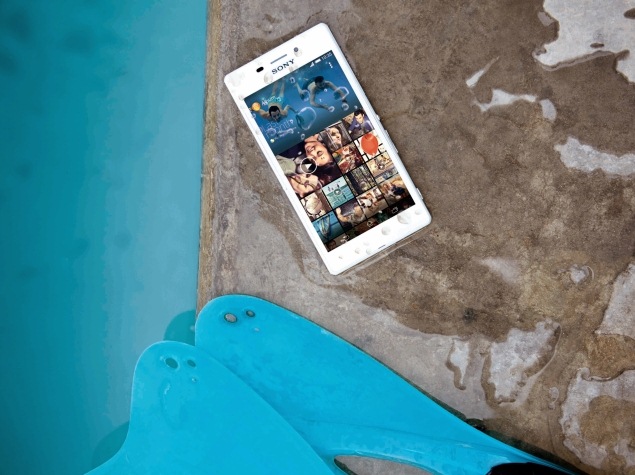
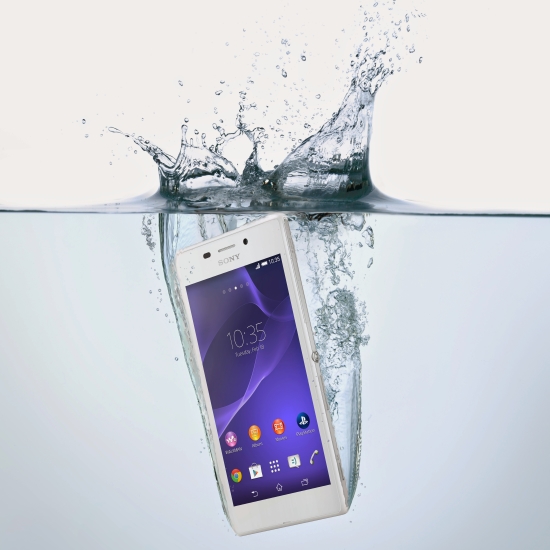
Sony on Tuesday has introduced
its first mid-range waterproof smartphone - the Sony Xperia M2 Aqua -
with the tagline 'waterproof smartphone for everyone.' The company
hasn't detailed the pricing as yet, but has said that the smartphone
will be rolled-out in Autumn 2014 to several markets including Asia
Pacific, Europe and Latin America.
The specifications on Sony
Xperia M2 Aqua are same as the Xperia M2 and Xperia M2 Dual (which was
launched
at Rs. 21,990 in India), except that Sony has put in its improved
waterproof technology with what Sony claims is the highest dust-proof
and waterproof rating (IP65/68) in a smartphone. It is said to be able
withstand immersion in up to 1 metre of water indefinitely. Previously,
both flagship smartphones, Xperia Z1 and Xperia Z2 were IP55/58
certified devices.
"Xperia M2 Aqua is a significant milestone in
our product portfolio as we bring yet another of our signature
technologies to a new category of smartphones," said Calum MacDougall,
Director of Xperia Marketing at Sony Mobile.
Just like the Sony
Xperia M2, the Xperia M2 Aqua is a single-SIM supporting device and
features a 4.8-inch qHD display with a resolution of 540x960 pixels. It
packs a 1.2GHz quad-core Qualcomm Snapdragon 400 processor coupled with
1GB of RAM.
The 8GB of inbuilt storage on Xperia M2 Aqua can be
expanded with microSD card up to 32GB. The device boasts a similar
8-megapixel rear camera with flash and a 0.3-megapixel front facing
camera.
It packs a 2300mAh battery and will be available in two
colours - Black and White. Connectivity options include 4G LTE, GPS/
A-GPS, GLONASS, Bluetooth 4.0, NFC, Wi-Fi, DLNA, and ANT+ for sports
accessories. It also comes preloaded with Lifelog app for SmartBand
SWR10. Notably, Sony has not announced a dual-SIM variant of the Xperia
M2 Aqua yet.
Windows 8.1 gets a bad reputation as a tablet OS in spite of all the
work Microsoft has put into it. While it's true that it's quite a
stretch to build a platform that covers all possible computing forms,
Windows 8.1 has some nice features that leaves Android behind.
Snap view
Microsoft wasn't the first to develop a scheme allowing multiple apps
to run and display at the same time, but it's done it better than
anyone. Snap view allows putting multiple apps onscreen and then
adjusting each pane to the size that works best.
While Android doesn't have this ability, Samsung has its multi-view
which works in a similar fashion. It's restricted to a few approved
apps, though, and that is a big limiter compared to Windows 8.1. It's
only on a few Galaxy devices and not part of Android proper.
Samsung's multi-view is better than Microsoft's snap view in one
area, and that's the ability to rotate the screen to portrait and still
use it. The Windows 8.1 snap view will only work in landscape, in fact
it disables screen rotation when it's active. That smacks of laziness of
the developers of Windows and needs to be fixed.
The one restriction aside, snap view in Windows 8.1 is well implemented and it's nice to find it ingrained in the OS.
Updates
(Image: James Kendrick/ZDNet)
Have a lengthy discussion about Android and it will eventually turn
to the thorny subject of updates. Perhaps the lack of updates is a more
accurate way to put it.
Updates to Android devices are at the whim of the device makers and
carriers and there's no guarantee that a given device will ever get that
shiny new version of Android. If they do, it will likely be long after
it's available from Google.
Windows device owners aren't saddled with this update envy, as all updates are pushed to devices. A very few may not have the smoothest update experience, but at least they get the chance to grab new updates.
While it's true that Android devices continue working just fine
without each new OS update, they do miss getting some security updates
that are part of these OS renewals.
Mobile experience improvement
Android has been out longer than Windows 8, and it seems that the
user experience (UX) is roughly the same as it's been for a long time.
Sure there are minor improvements with each new version, but that's
about it.
The story is different when it comes to Windows 8. While there were
some serious shortcomings in the original version of Windows 8,
Microsoft stepped up to the plate and ironed them out with Windows 8.1.
That Windows 8.1 rolled out so fast
is a testament to the new Microsoft. The improvements that are
ingrained in Windows 8.1 are not minor. The advantage of snap view is
due in large part to the 8.1 upgrade.
Rumors are already appearing about the upcoming Windows 9, which will no doubt be another major step forward as far as the UX is concerned.
Sharing
We've been taught since an early age that sharing is a good thing,
and that certainly applies to information. The ability to send
information from one app to another is very powerful on mobile devices.
Both Windows 8.1 and Android have the ability to share information
between apps, but the Windows implementation seems to be more
consistent. The Share feature is always available right there in the
Charms menu, and many apps have it implemented well.
There are a few apps that don't have the ability to share, Google's
Chrome comes to mind, but for the most part apps make it simple to do
so.
A great example of sharing in Windows 8.1 was given to me by a
friend. He's able to take ink notes in Windows Journal on his tablet and
share them to his Evernote cloud where all his other notes live.
Another good example is the ability to share web pages to the Windows
8.1 Reading List app. This saves information on the web to read later
in the Reading List app designed specifically for that purpose.
Sharing information is not missing from Android, but it's more useful in Windows 8.1 in this writer's experience.
The evolution of Windows
Windows 8.1 isn't for everyone but it's coming along nicely. It's not
strictly a mobile OS but it's evolving into a decent one. The
advantages discussed here are not the only ones over Android, but they
are big enough to make a difference.
Some may feel that the availability of Microsoft Office on Windows
8.1 is a big advantage over Android and wonder why it's not on this
short list. While the absence of Office on Android is a disadvantage
over Windows for some, it's not for the millions of current Android
users and thus is not discussed here.
Android makes more sense for some mobile users as it's a robust
platform for tablets and phones. It's now making its way onto the
desktop, too. Those wanting a pure mobile UX can do well with Android.
Windows is a better mobile OS than some realize, and it would be a
mistake to overlook it. Mobile devices of all types are now available
with Windows 8.1, and that alone could be an advantage for some over
Android.
Posted by Unknown | 9:15 AMCategories: Windows phone
Windows Phone is gaining UK marketshare adding 800,000 users over the past year and shunting
BlackBerry down to fourth spot.
Windows Phone, predominantly Microsoft-owned Nokia devices, saw its
market share increase from 5.8 per cent to 7.5 per cent over the past
year, according to research firm eMarketer. The forecasts also claim
that the platform will inch closer to the 10 per cent mark in 2014 with
nine per cent of UK smartphone users.
Meanwhile BlackBerry’s user base continues to be eroded falling from
11 per cent in 2013, to 6.5 per cent this year, and a forecasted drop to
just 3.5 per cent next year.
The top end of the scale remains unchanged with Android dominating
the market on 53 per cent currently and iOS on 30.5 per cent. Both have
recorded incremental rises of 3.4 per cent and 1.5 per cent over the
past year respectively.
Despite the jump in Windows Phone’s marketshare eMarketer analyst Bill Fisher says that the platform is “treading water”.
“The demise of BlackBerry has long been documented but these numbers
highlight just how far it has fallen from grace,” he said. “Android and
iOS are clearly dominant, but while Microsoft is making significant
effort to grow its presence-buying Nokia’s mobile phone unit and
recently partnering with HTC to offer a Windows-based version of the
flagship HTC One M8-BlackBerry appears to have been treading water.”
The report also revealed that smartphone penetration in the UK was
now at 56.1 per cent of the population (33.2 million people) and 69.5
per cent of mobile phone users. By 2018, eMarketer says that this number
will grow to 69.1 per cent of the population (46.4 million people) and
84.8 per cent of mobile phone users.
The HTC One M8 for Windows marks a new tack Microsoft
hopes will lead to greater popularity for Windows Phone. The basic idea:
Let handset makers reuse high-end Android hardware.
Microsoft
vice president of engineering Darren Laybourn shows off the new HTC One
M8 for Windows Phone at an event in New York City in August 2014,
CNET/Sarah Tew
Rival Android could be the cavalry coming to the rescue of Windows
Phone, in Microsoft's latest maneuver to advance its smartphone
operating system.
The underlying notion is this: Microsoft wants
to make it easier to introduce devices that use the Windows Phone
software. That was the message delivered this week's announcement of the
HTC One M8 for Windows Phone.
Specifically,
Microsoft has tweaked its Windows Phone 8.1 software so that hardware
makers can lean on the hardware and reference designs they're already
using to build devices for Android-based phones in order to build a
Windows Phone device.
"We wanted handset makers like HTC to be
able to leverage their engineering investment and provide them with a
real choice," said Darren Laybourn, vice president of engineering for
Microsoft in an interview following the launch of the HTC One M8 for Windows. "We feel the software should be the differentiator and not the hardware."
Microsoft has struggled to convince hardware partners to make phones
running the Windows Phone operating system in what has turned into a
chicken-and-egg scenario. Device makers don't want to dedicate resources
to building a Windows Phone because there are so few customers. But
without the devices -- especially iconic ones that offer cutting edge
components and technology -- the operating system will never gain
popularity among customers.
Management knows that Microsoft's
mobile ambitions are doomed if it can't break that pattern. The solution
depends on finding a way to get device makers other than Nokia, whose
handset operations Microsoft acquired earlier this year for more than $7 billion, to build high-end smartphones using Windows Phone.
"Ideally, I'm sure that Microsoft wants HTC, Samsung and others to
produce exclusive designs for their software," said Ross Rubin,
principal analyst at Reticle Research. "But I think they recognize the
market reality now. And they're willing to let dedicated hardware go to
get more high-end Windows Phone smartphones on the market."
Switching strategies
Microsoft's Laybourn said the company
had begun tweaking the Windows Software to adapt to different hardware
designs even before starting work with HTC. For instance, Windows Phone 8.1, launched in the spring,
offers redesigned software keys that strip away the old hard buttons on
the bottom of the device, replacing them with "soft keys" that pop up
at the bottom of screen.
He said there are now 14 devices in
Microsoft's reference design program expected to wind up as real
products in the next six months. Some will use Android hardware designs
reconfigured slightly to work with the Windows Phone software.
This strategy makes sense for handset makers. Previous versions of
Windows Phone forced them to build hardware from scratch. In addition
to supporting two reference designs, which means handling two separate
component supply chains, it also meant developing separate marketing
budgets for each device.
For a company like HTC, which is already struggling to keep up with the massive marketing budgets of Apple and Samsung,
this is a huge barrier. Being able to leverage the existing brand
recognition of the HTC One series of devices and being able to market
both an Android and a Windows Phone version of the latest flagship
device in that family can save the company millions in marketing
dollars.
"HTC has never been able to compete on marketing
spend," Rubin said. "So optimizing the opportunity to build on the
marketing it has already done with the Android version of the One M8
makes a lot of sense."
What's more, the designs and
specifications used to build Android devices are often a generation
ahead of what's used in Windows Phone devices, Rubin added. This allows a
company like HTC to build a truly high-end smartphone with the latest
specifications.
Jason Mackenzie, president of HTC Americas, said
during the presentation of the new device on Tuesday that the HTC One
M8 for Windows marked "the first time a smartphone manufacturer has
launched an iconic device on multiple operating systems without making
any compromises."
HTC President of Americas Jason Mackenzie introduces the HTC One M8 for Windows in New York City in August 2014.
CNET/Sarah Tew
In an interview, McKenzie acknowledged that it was difficult to build a
flagship phone around the previous versions of Windows Phone. And he
said that when it came to the overall Windows Phone line-up, he saw a
gap.
"When you look at all of the available Windows Phones,
there isn't a real premium smartphone that matches what's offered on
Android," he said. "When we're announcing a flagship device, it's on
Android."
But he said that HTC feels it's important to give
consumers more choices. And even though Microsoft's Windows Phone market
share is just that tiny, 2.5 percent sliver, Mackenzie said that it's
wise to keep it as an alternative to Google Android.
Still, in
spite of a relationship with Microsoft that dates back to the old
PocketPC and the original Windows Mobile smartphones, HTC had not introduced a new Windows Phone since the fall of 2012. Part of the reason for the lag was Microsoft's relationship with Finnish device-maker Nokia, Mackenzie said. A year ago, Microsoft announced its plans to buy Nokia for €5.44 billion, or $7.2 billion.
"We were waiting to see how the relationship would take shape," he
said. "Then there was the acquisition and a regime change at Microsoft.
We weren't sure what their strategy was going to be."
Microsoft CEO Steve Ballmer left his post in February and was replaced by Satya Nadella.
After months of speculation about Microsoft's intent, Nadella's plans
for the former Nokia unit and for Windows Phone more generally are
coming into focus. Last month, the company announced it will be laying off 18,000 employees,
most from Nokia. The decision suggests that Microsoft won't rely on
only Nokia hardware to drive its mobile strategy. The company still
needs partners, like HTC.
"Microsoft needs someone else to build
the hardware other than relying on the in-house Nokia," said Roger
Entner, lead analyst at Recon Analytics.
Maribel Lopez, head of
Lopez Research, agrees. She said that Nokia makes beautiful phones but
it will take much more to broaden "ecosystem support" for Windows Phone.
"And that's what Microsoft needs to make Windows Phone a success," she
said. "It needs to get the benefit of scale with parts and processors
to lower the cost to make these phones."
The stage is set
Microsoft and HTC executives met in January at the Consumer
Electronics Show to discuss the two companies' relationship. It quickly
became clear that the two sides could work together to bring the new
Windows Phone 8.1 to existing Android hardware being used on HTC's
flagship device.
Laybourn said that Terry Myerson, Microsoft's
executive vice president of operating systems, met with HTC CEO Peter
Chou. But the dialogue quickly included the rest of the leadership teams
from both companies -- including executives from Verizon Wireless.
Laybourn said that Microsoft didn't see a gap per se at the high end of
the Windows Phone market. But it was also clear that Microsoft needed to
attract more handset makers and make it easier for them to deploy the
operating system.
Meanwhile, Verizon saw the same gap in hardware that HTC saw.
"We realized at the end of 2013 that when we were selecting devices
for the 2014 lineup that there were gaps in the market for Windows
Phone, particularly at the high end," Jeff, Dietel, vice president of
marketing operations at Verizon Wireless said in an interview.
Jeff Dietel, a Verizon executive, at HTC's event in August 2014 to launch the HTC One M8 for Windows.
Sarah Tew/CNET
Verizon currently sells the Nokia Lumia
Icon and the Nokia Lumia 928. Dietel acknowledged these are great
devices, but he said the HTC One franchise is in a different category
among Verizon subscribers.
"HTC has been more synonymous with
material fit and finish, as well as just really good design," he said.
"Nokia offers terrific hardware, but HTC is just more established in the
US in terms of momentum."
He added that Verizon customers
really wanted more choices when it came to smartphones. Not only did
they want more hardware choices among Android devices, but he said
customers want more software choices, too.
While HTC and Verizon
have harped on this notion that consumers are clamoring for more
choices, one could argue that they are actually being served well enough
by Google Android and Apple iOS, which combined account for 96.4
percent of the market, according to IDC. What is more likely is that
handset makers and the carriers themselves like having more choices.
"Windows Phone has a niche audience," Reticle Research's Rubin said.
"But what it comes down to is that handset makers like having a hedge.
They are uncomfortable being beholden to Google or Apple. They want to
keep their options open."
With this latest effort and thanks to
efforts by Qualcomm, which has also worked closely with Microsoft to
make sure its processors can run on both Windows phone and Android
handsets, it could be easier and more cost effective to build devices
for each platform using the same hardware.
"There's been a lot
of talk throughout the years of creating a dual-boot phone, which is
essentially a single device that can run Android or Windows," Laybourn
said. "So it's not like we had an epiphany about all this. But we did
see an opportunity, and we did the work to make it possible."
Asked if he expected more high-end devices to come out that use the same hardware as Android phones, Laybourn chuckled.
s summer winds down, Weekend Reading delivers stories on a project
that helps diabetes patients, a profile on the chief technical officer
of Microsoft’s Cloud and Services organization, the debut of the HTC One
(M8) for Windows smartphone and Steve Ballmer stepping down from the
Microsoft Board of Directors.
A new pilot project, in conjunction with Health Choice
Network, will provide Windows Phone devices to diabetes patients to help
them better manage their care. Microsoft and pre-paid wireless leader TracFone announced Thursday a better way for underserved and high-risk populations to access and keep up with their care, on the go. A profile on Dave Campbell, Chief Technical Officer of Microsoft’s Cloud and Services, uncovers why he’s disruptive.
And by that, we mean how one of the company’s elite corps of Technical
Fellows can be considered transformative, tearing something down to
create something new and better.
Dave Campbell
Tuesday, we saw the debut of the HTC One (M8) for Windows. It’s the first device to ship in the U.S. with the Windows Phone 8.1 Update,
will be available exclusively through Verizon Wireless online and in
stores. It comes loaded with features such as Cortana, Live Folders and
Action Center. It’s made from a single block of aluminum, and has a
5-inch Super LCD3 1080p HD display with Corning Gorilla Glass 3.
A profile on teenager Alejandra Tristan,
who has a rare genetic disorder that made it impossible to use a mouse
or computer, revealed how Windows 8 has helped transform her life. Tristan suffers from Ehlers-Danlos syndrome (EDS),
which makes her joints fragile and loose. With its customizable design,
enhanced accessibility features and touchscreen, Windows 8 has helped
Tristan reclaim her studies, her friends and her voice. She writes
research papers by gently touching the on-screen keyboard and dictates
notes using speech recognition software. When she works on vocabulary
words, she uses digital notecards.
Micromax
seems all set to launch a new smartphone with Android 4.4.2 KitKat, the
Micromax Canvas
XL2, as it has been listed on the company's site. The
company has yet to announce pricing or availability details however.
The
dual-SIM Micromax Canvas XL2 (A109) according to the company listing
runs Android 4.4.2 KitKat out-of-the-box, and features a 5.5-inch qHD
(540x960 pixels) IPS display.
The phablet is powered by a
quad-core 1.2GHz MediaTek MT6589M processor, coupled with 1GB of RAM.
The Micromax Canvas XL2 A109 sports a 5-megapixel autofocus rear camera
and a 0.3-megapixel (VGA) front-facing camera.
There is 4GB of
built-in storage on the Canvas XL2, which can be expanded via microSD
card (up to 32GB). Connectivity options on the smartphone include 3G,
Wi-Fi, Bluetooth 4.0 with A2DP, Micro-USB, FM radio and GPS/ A-GPS. It
packs a 2500mAh battery, which is rated to deliver up to 255 hours of
standby time, and 8.5 hours of talk time.
Micromax is yet to
launch another smartphone that was recently
listed
on its website, the octa-core Canvas Knight Cameo A290, despite it
being available online at a third-party retailer.
The dual-SIM
Micromax Canvas Knight Cameo A290 runs Android 4.4.2 KitKat
out-of-the-box, and features a 4.7-inch HD (720x1280 pixels) display.
The smartphone is powered by a 1.4GHz octa-core MediaTek MT6592M
processor alongside 1GB RAM. It sports an 8-megapixel auto-focus rear
camera with LED flash and full-HD (1080p) video recording support, while
there is a 5-megapixel fixed-focus front-facing camera also onboard.
The 8GB of inbuilt storage on the Canvas Knight Cameo A290 is expandable
via microSD card (up to 32GB).
The handset maker HTC has unveiled a new smartphone that runs a Windows Phone operating
system.
The modified One M8 is being sold at roughly half the price of the same handset running Google's Android.
This is the first time the struggling manufacturer has released a Windows smartphone in more than two years.
One analyst said the new device was "almost certainly
financially supported" by Microsoft, in an attempt to gain a foothold in
the US market.
The new phone, which comes with Windows Phone 8.1 pre-installed, is available exclusively through US network provider Verizon.
When bought with a 24 month contract, it is priced at $99 (£60), approximately 50% cheaper than the Android One M8.
"Consumers love the HTC One M8 and today's
introduction extends that enthusiasm to new audiences hungry for choice
in their mobile experience," said Jason Mackenzie, president of HTC
Americas.
He added: "Microsoft shares our vision, and that's why we committed to bringing the Windows Phone platform to the HTC One M8."
Android losses
The Taiwanese firm, which originally made its name selling
early versions of Windows phone handsets, has preferred Android devices
in recent years.
However it has recently lost out to rivals such as Samsung,
and while its flagship handset, the HTC One, received good reviews,
these did not translate into strong sales.
In April, HTC posted losses of 1.88bn Taiwanese dollars
(£37m; $63m) for the first three months of 2014, compared with a profit
of T$85m a year earlier.
Shares in HTC have dropped by 38% in the past year.
Microsoft 'desperate'
Daniel Gleeson, an analyst at the consultancy IHS Technology,
told the BBC the move was a "big thing for Microsoft as they want a big
push for Windows phones in North America".
"Microsoft are desperate for other manufacturers to develop Windows
smartphones, and they almost certainly financially supported HTC to make
this phone," he added.
"Microsoft needs to kickstart the whole Windows Phone
ecosystem. Its apps do not get updated at the same frequency as Android
or iOS equivalents."
As for the pricing of the phone, Mr Gleeson said, this was an
attempt by HTC and Microsoft to position themselves as a cheaper
alternative to the upcoming new iPhone.
Earlier on Tuesday, HTC's chief executive Peter Chou unveiled another new phone in Tokyo, aimed at the Japanese market.
The updated J Butterfly model, the HTL23, features a plastic body, but is otherwise similar to the Android One M8.
.png "English")